If there’s one place in the world known for its mushrooms, it’s Pennsylvania. This marvelous, mysterious crop is grown in spades in southeastern PA, where the “Mushroom Capital of the World” sits in Chester County. Roughly 60 mushroom farms operate across the state, cranking out endless yields of culinary mushrooms to an ever-increasing demand. This delicate crop, grown indoors with very little impact from the outside world, makes its way to our plate in myriad delectable forms.
We spoke with two PA Preferred® mushroom farmers whose family farms go back generations. They’ve built upon a legacy of mushroom farming in PA while shaping the state’s modern mushroom industry. Join us as we go behind the scenes with Meghan Klotzbach, Vice President of Operations, Sales and Marketing at Mother Earth, LLC and Gale Ferranto, President of Buona Foods.
PA’s Mushroom Farming History
Pennsylvania’s stronghold on the mushroom industry began more by kismet than design. What started as a value-added product became one of the region’s (and state’s) most valuable and abundant crops. According to the American Mushroom Institute in Avondale, it all started in the 1880s with a Quaker family in Kennett Square by the name of Swayne. Florist William Swayne had the idea to grow mushrooms in the space underneath his carnation beds. At the time, wild mushrooms fetched a premium at Philadelphia markets, but commercial mushroom cultivation and farming did not yet exist in the states. Swayne imported spores from England, and began growing them under the carnations, covered with burlap. He found success, and decided to build a mushroom house. It was the first in an area that’s now positively peppered with them. Fellow Quaker and florist Jacob Steyer followed suit, and the two launched the industry, which began slowly (but surely) snowballing into something massive.
The development of a pure culture spawn in the early 20th century allowed mushroom farmers to grow only desirable species, and business really took off. Kennett Square could meet the growing public appetite for mushrooms with its proximity and direct lines to cities like Philadelphia, and the ready availability of mushroom-feeding manure during the horse and buggy era. According to the Daily Local News of 1931, there were about 500 mushroom houses within a 10-mile radius of Kennett Square in 1930. Pennsylvania was producing 85% percent of all the mushrooms farmed in the country.
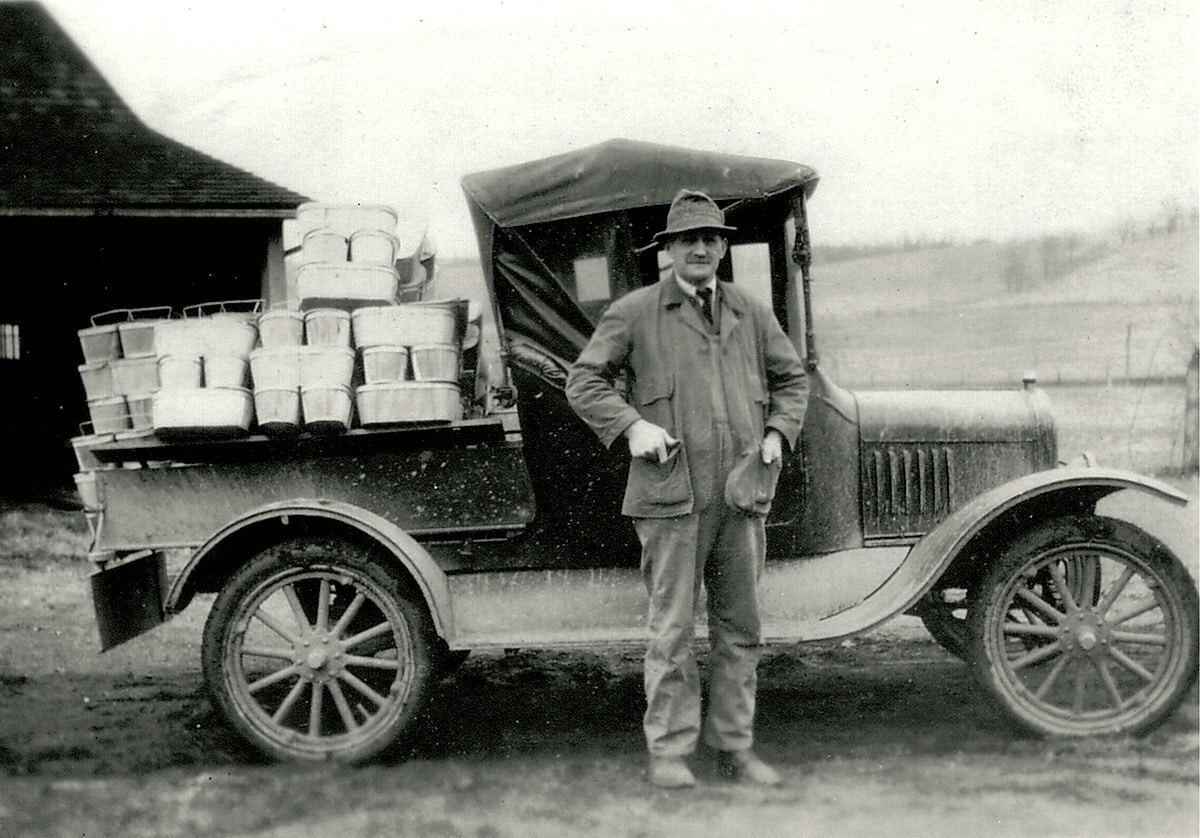
Arthur P. Yeatman
Both Mother Earth, LLC and Buona Foods took root during the industry’s early, formative years. Arthur Yeatman erected a mushroom house in 1921, which would later evolve into Mother Earth, while Ferranto’s grandfather, Giacomo “Jack” Ranalli grew mushrooms for decades before his daughter (Ferranto’s mother), Rosemary “RoRo” Ferranto, founded Buona Foods in 1972.
A Look at Today’s Mushroom Industry
Mushrooms are a billion dollar industry. Though thousands of edible varieties exist, we primarily cultivate and consume one as a cash crop: the Agaricus bisporus. This species of mushroom includes white button mushrooms, creminis (also known as brown or baby bella mushrooms) and portobello mushrooms, which are all just different phases of the same fungi. Pennsylvania accounts for over 65% of the total sales of mushrooms in the U.S., well over 500 million pounds per year.
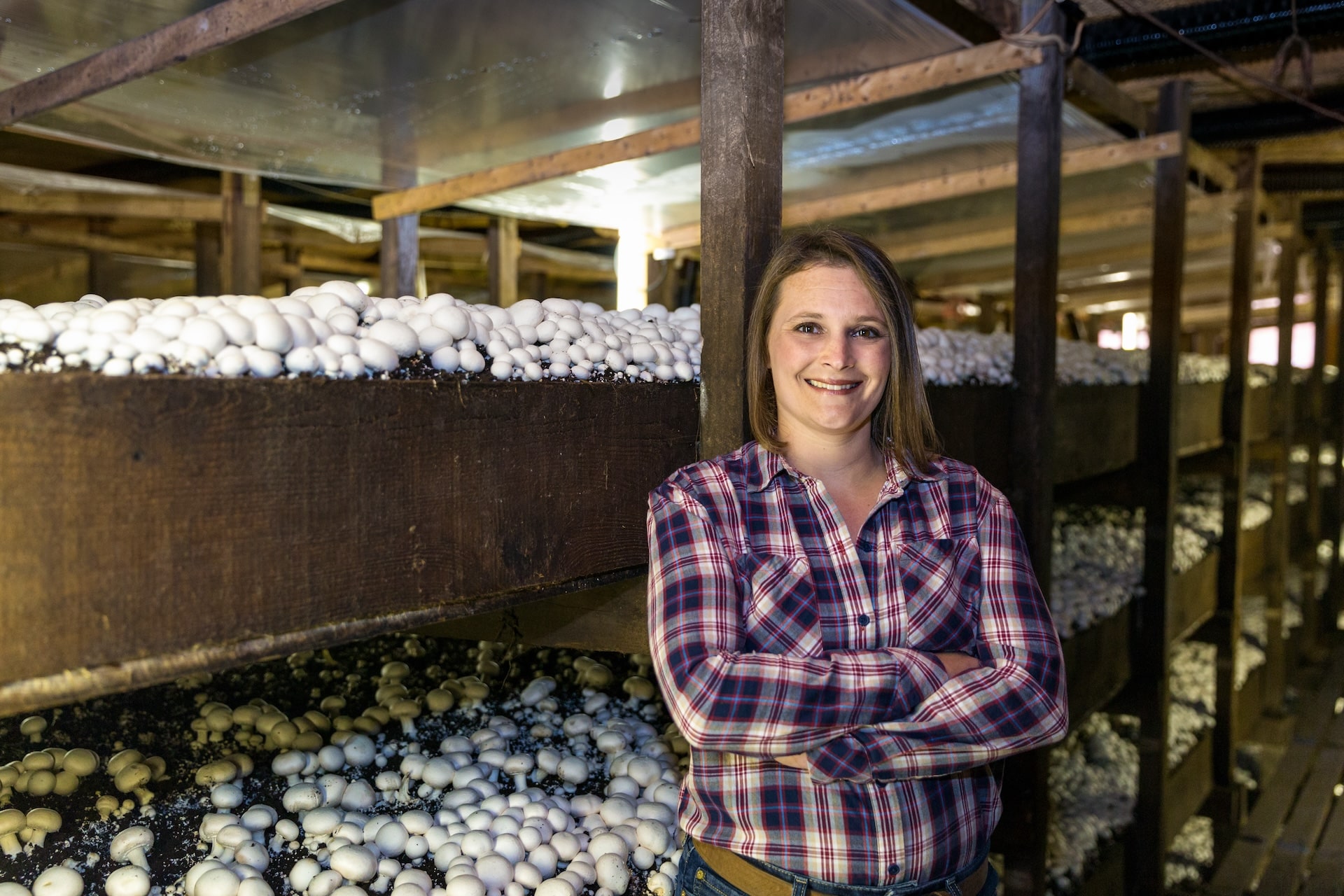
Klotzbach
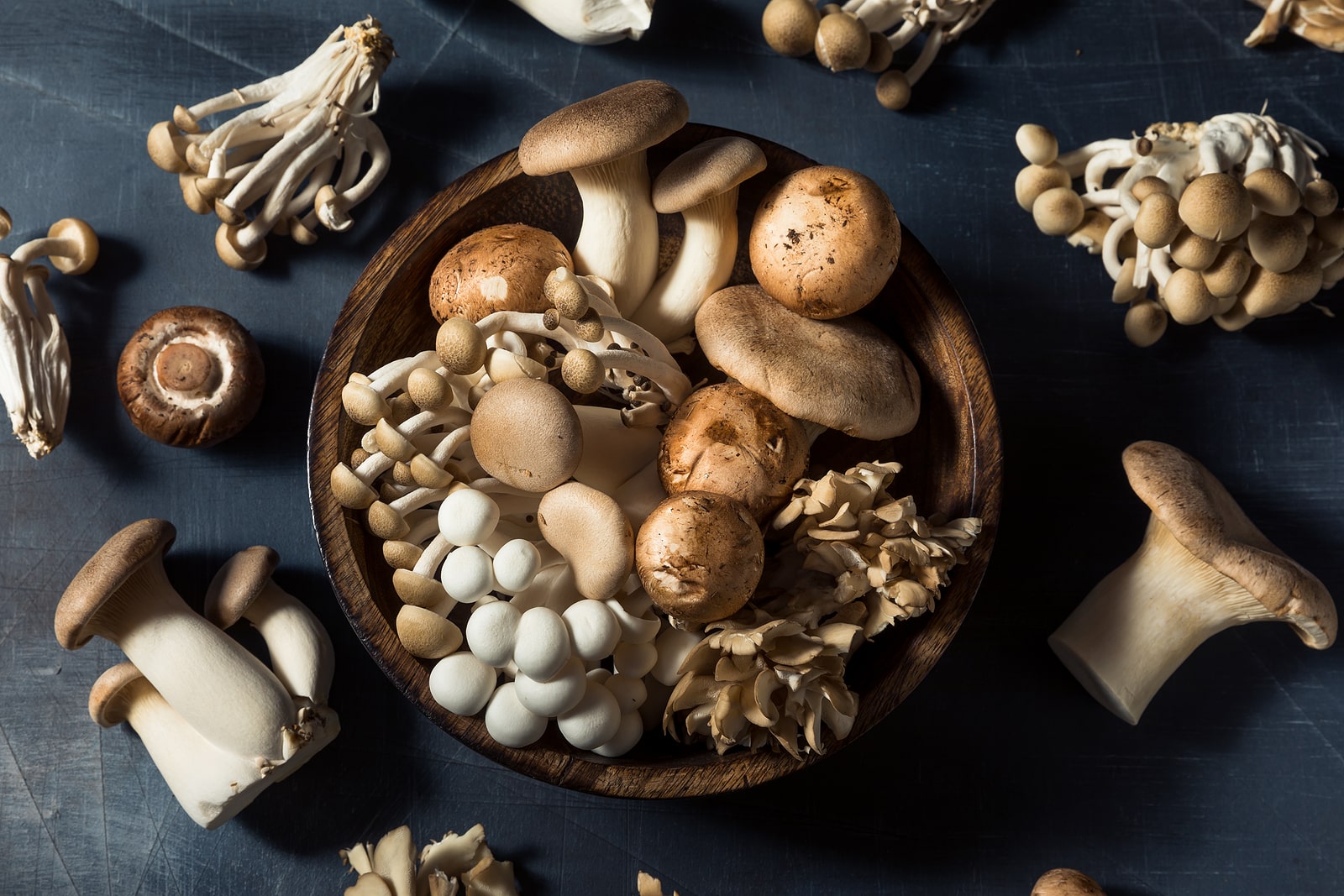
While Agaricus bisporus mushrooms have long dominated the market, “exotic” varieties are rapidly growing in demand. Klotzbach says, “Exotic mushrooms used to go to high-end chefs. You’d only see them in a restaurant. But now, people are more knowledgeable and want to try new things.” Mother Earth offers a variety, including the Mother’s Harvest blend of mushrooms like lion’s mane, oyster, pioppino, maitake and royal trumpet. Buona Foods offers many of the same, as well as beech mushrooms. Mother Earth will also begin shipping chestnut mushrooms soon, a rising star.
Mushrooms are grown indoors in controlled environments, making mushroom farming a four seasons endeavor. This creates a double-edged sword of never-ending demand and around-the-clock work. “It’s a tough business to manage,” says Ferranto. “It’s seven days a week. And mushrooms grow and double in size every 24 hours, so we need a lot of labor to hand harvest.”
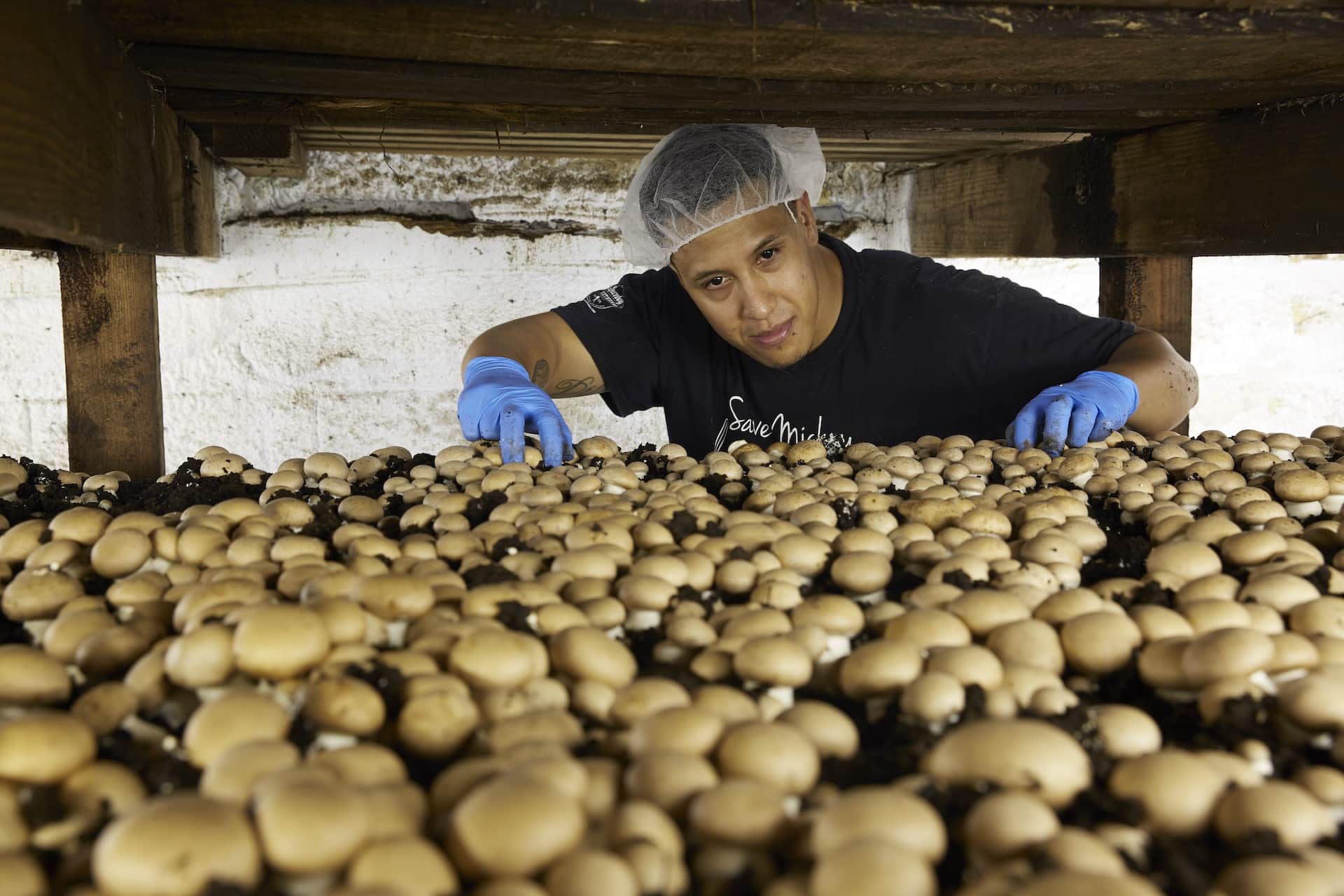
Harvesting at Buona Foods
While there are growing mechanical solutions, most mushrooms are harvested by hand, which requires great precision. Ferranto says, “It’s a skill to harvest mushrooms. You don’t go in and just mow the bed down. It takes months to become a trained harvester and to do it well. Everyone has their own knife, and it’s essentially part of their hand. You get flushes within a single crop. The first will give you an abundance of mushrooms, and then you have to prune it for the next crop that comes about a week later. So, it needs to be tended to after the first flush comes off. You prune it just like you would a plant.”
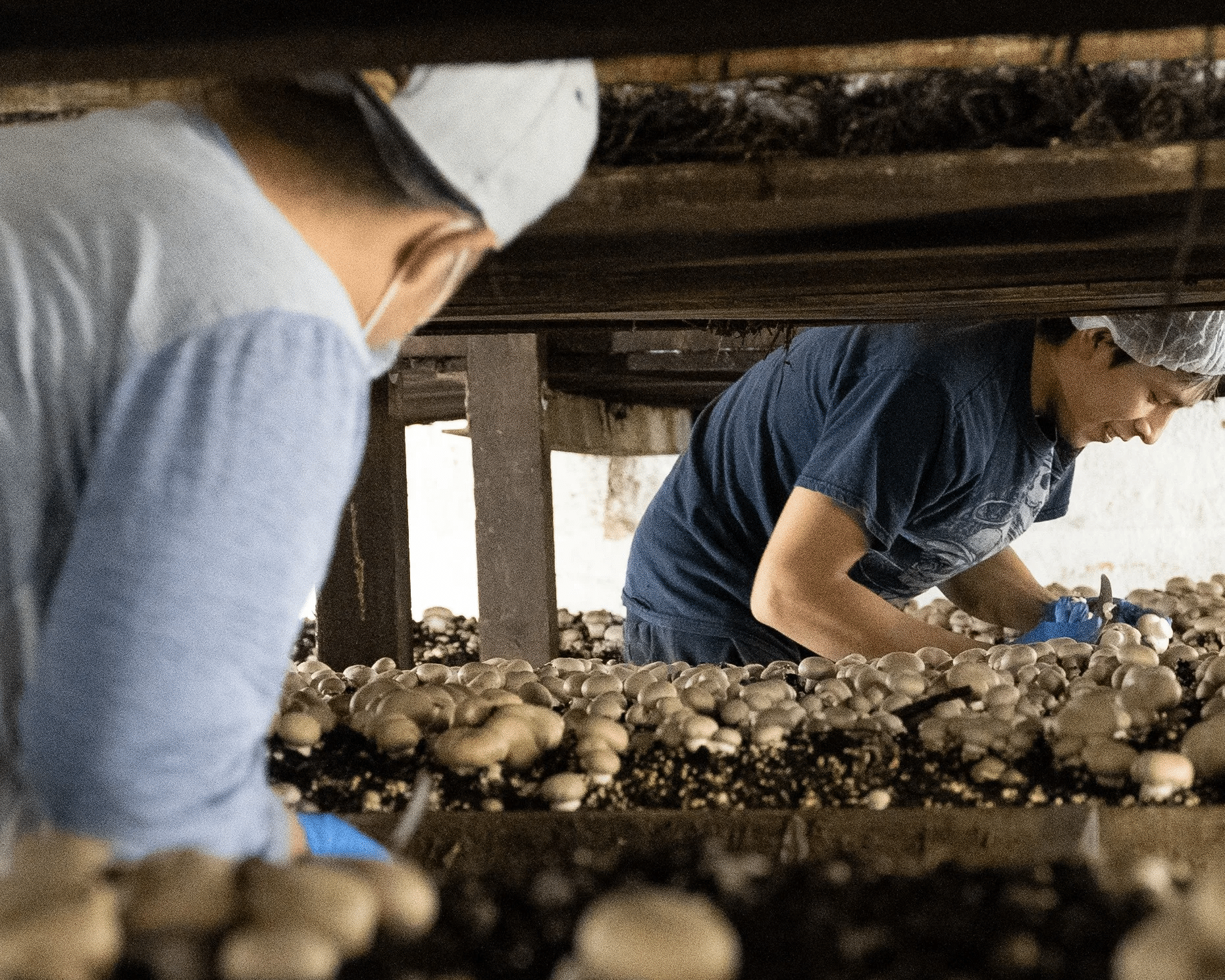
Harvesting at Buona Foods
In The Evolution of the Mushroom Industry in Kennett Square, Samuel Flammini traces the history of the region’s labor force, which has undergone many changes over the past century as different immigrant groups have settled and shifted. At the turn of the 21st century, the labor was composed of over 95% Mexican immigrants, who have come to establish a vibrant Hispanic community in southern Chester County. As social changes occur and subsequent generations change course, this critical labor force will likely remain in flux.
Mushroom farming is, by nature, a sustainable practice. “We’re the original recyclers,” says Ferranto. “We use byproducts from other agricultural crops as growing material for the mushrooms.” This includes compost, wheat straw, corn stover, poultry litter and horse manure, which gives the industry – and much of southern Chester County – its signature aroma. When mushrooms have finished growing, the remaining straw-like soil or “spent mushroom substrate” is rich and healthy, full of organic matter that’s outstanding for gardening and farming. It’s bagged and used to grow more agricultural products, closing the sustainable loop.
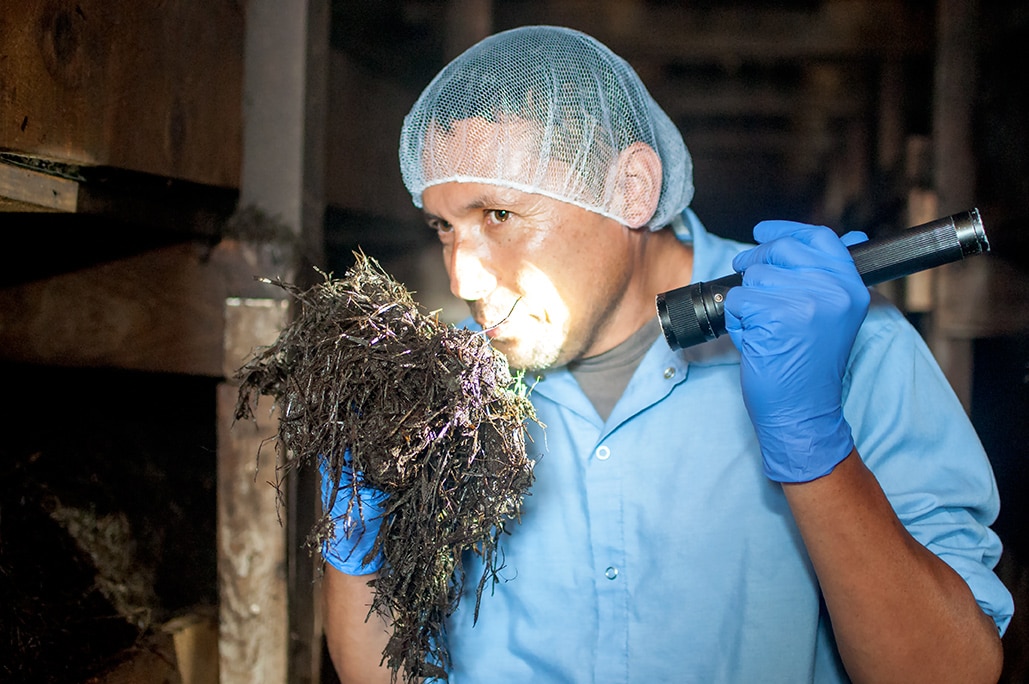
Compost at Mother Earth
There are roughly 60 mushroom farms in Pennsylvania today, 53 family owned and 20+ PA Preferred. Most (though certainly not all!) are found in Chester and Berks counties. You can find locally grown mushrooms near you by heading to PAPreferred.com, clicking on Find Farmers/Products, and selecting Mushrooms for a map and downloadable list. Or, “check for the check” and the signature PA Preferred logo while shopping at farmers markets and the grocer aisles.
The Main Characters
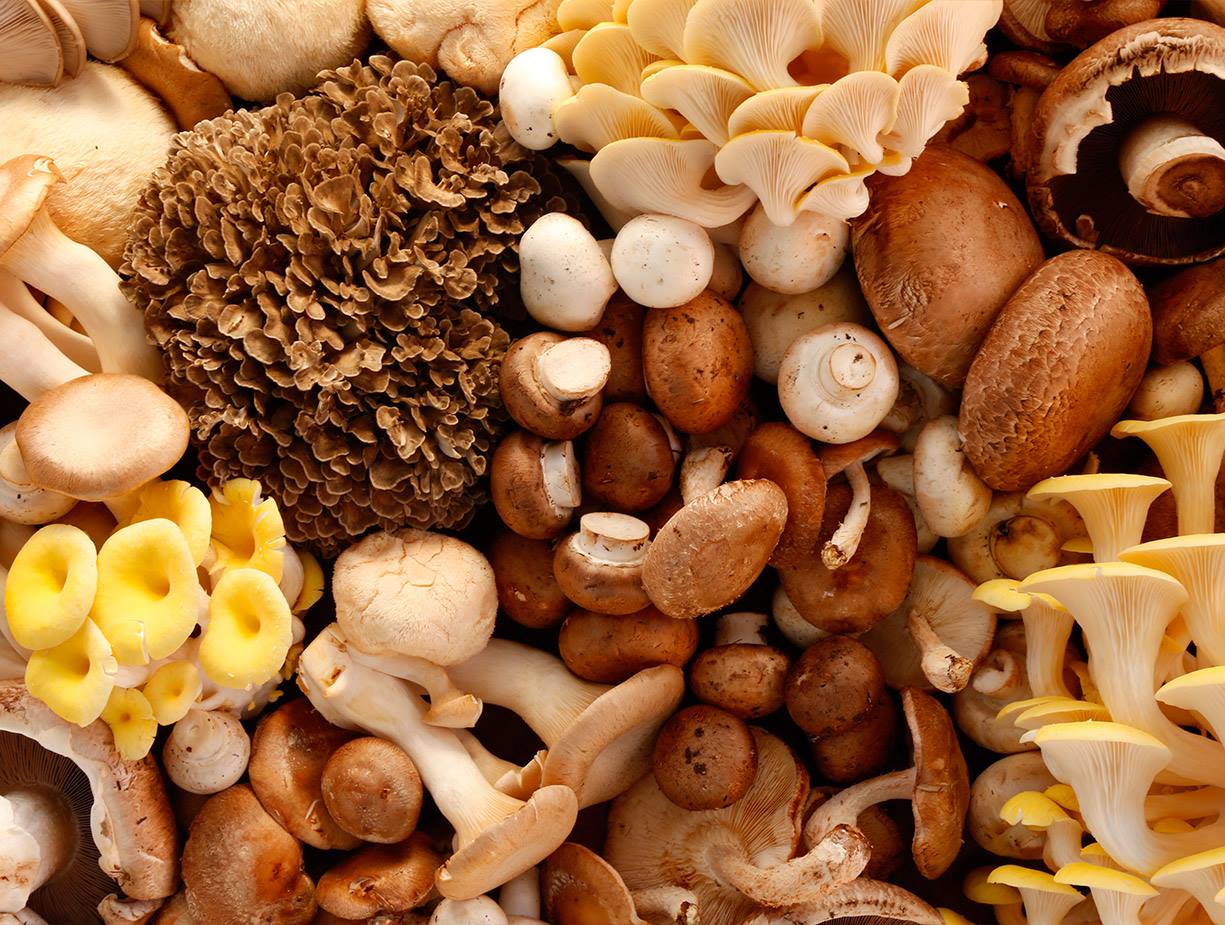
A variety of farm fresh mushrooms at Phillips Mushroom Farms
As mentioned, Agaricus bisporus is far and away the most common species of culinary mushroom – 90% of mushrooms consumed in the U.S. are white button mushrooms. These are actually just the immature versions of Agaricus bisporus, which becomes the cremini and then the portabella at intermediate and full maturity stages of growth. While exotic mushrooms may lack the affordability of white buttons, they are in ever-increasing demand by consumers. They’re the new school of fungi, offering a range of interesting flavor, texture and visual profiles that appeal to home chefs and within a trend towards plant-based eating.
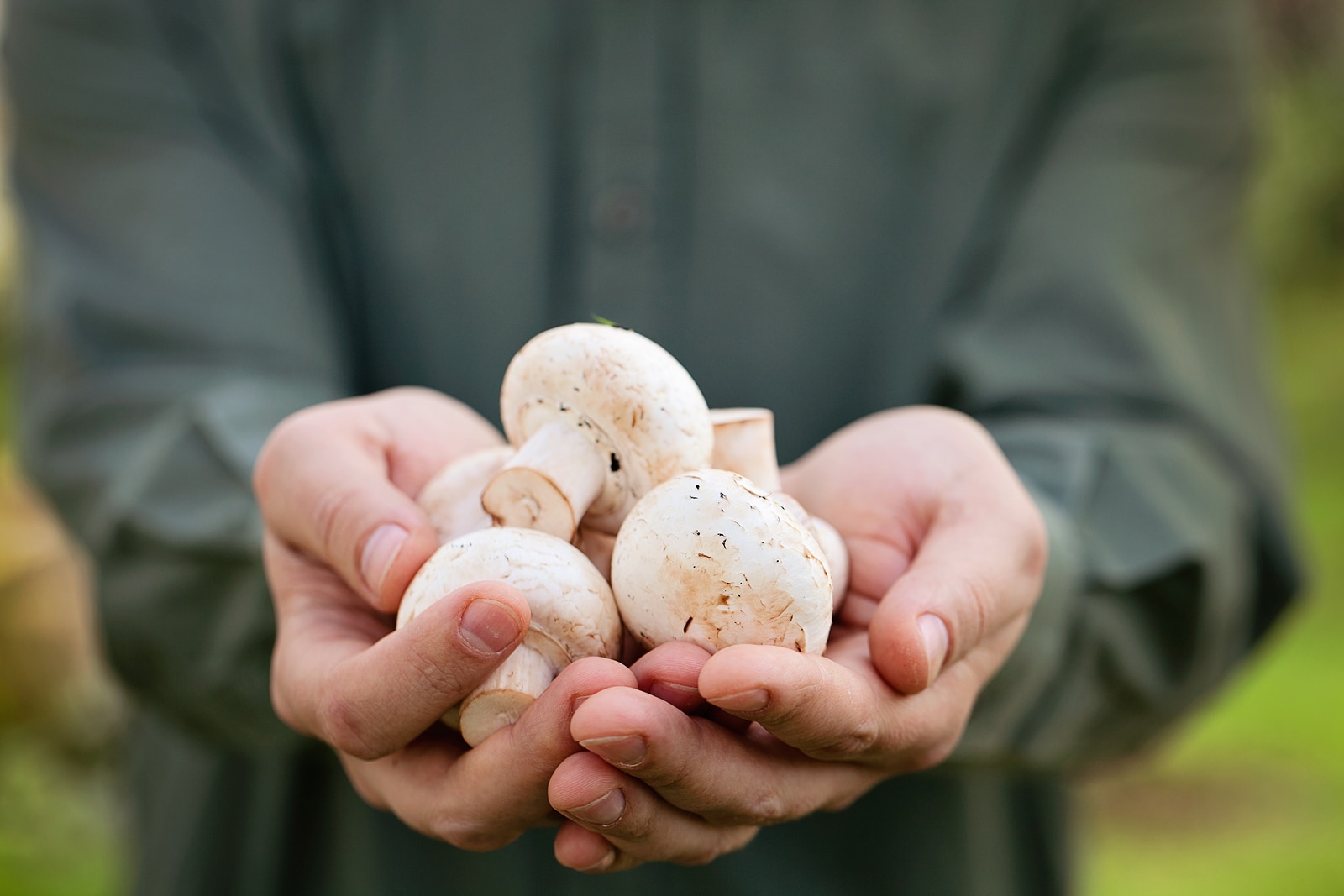
Mushrooms share a few primary taste and texture characteristics. Culinary mushrooms have an umami taste, which is the fifth basic taste alongside sweet, sour, bitter and salty. Umami is savory, meaty and creates a mouthwatering sensation. Other common fungi flavor descriptors are earthy, woodsy and nutty. When cooked, they take on the texture of a tender or chewy meat, making them a lovely vegetarian alternative that can hold its own as the main “protein” in a dish.
You can read all about popular mushroom varieties and how to use them on the Mushroom Council’s website, and peruse the Mother Earth and Buona Foods recipe collections. Here are a few stand-outs:
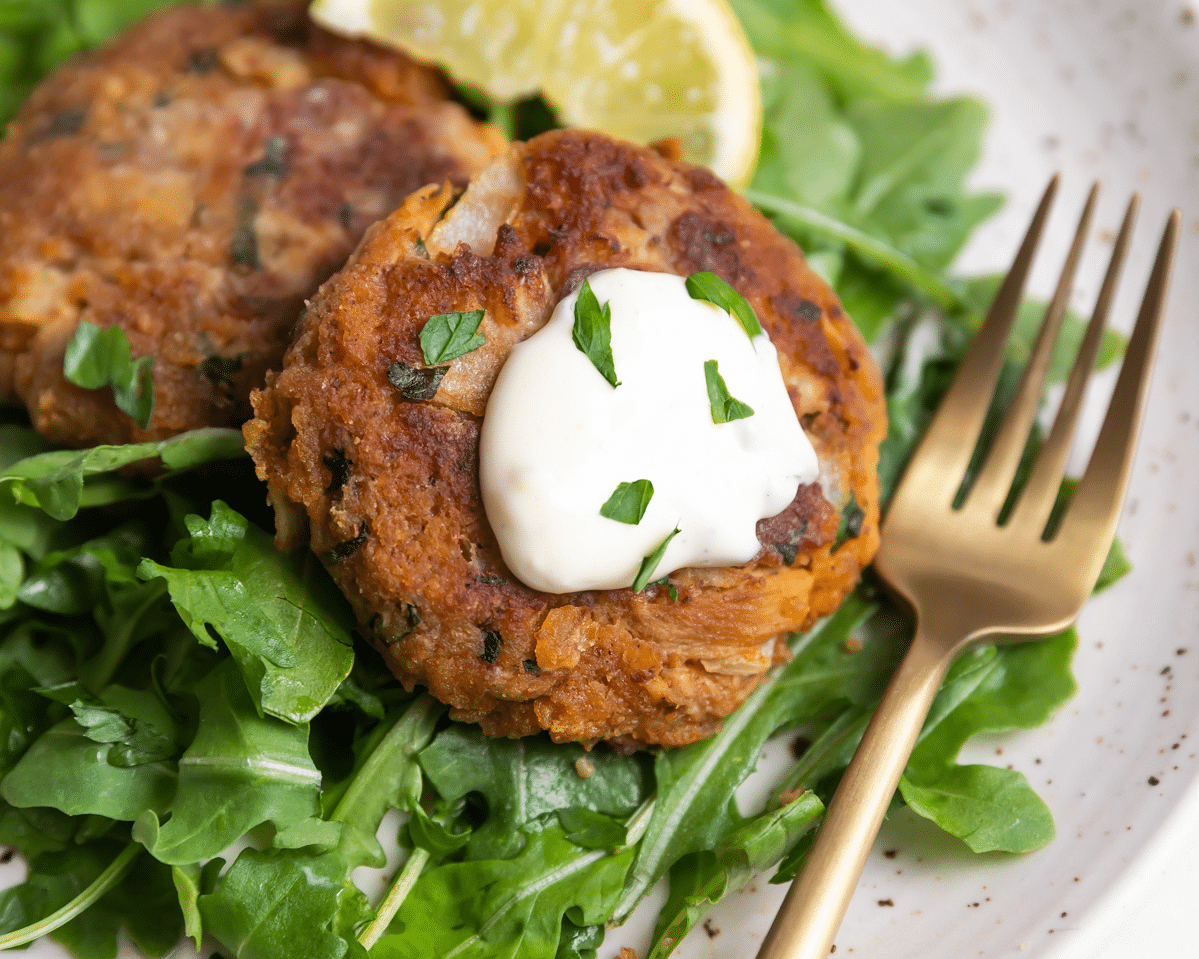
- Lion’s Mane Mushroom “Crab Cakes:” Mother Earth’s scrumptious take on crab cakes using shredded lion’s mane seasoned with Old Bay, panko breaded and pan fried to golden brown.
- Ready Shrooms Classic Blended Burger: Use Buona Foods’ super convenient pre-chopped blend of white button, baby bella and portabella mushrooms in a savory burger cooked in a pan or on the grill.
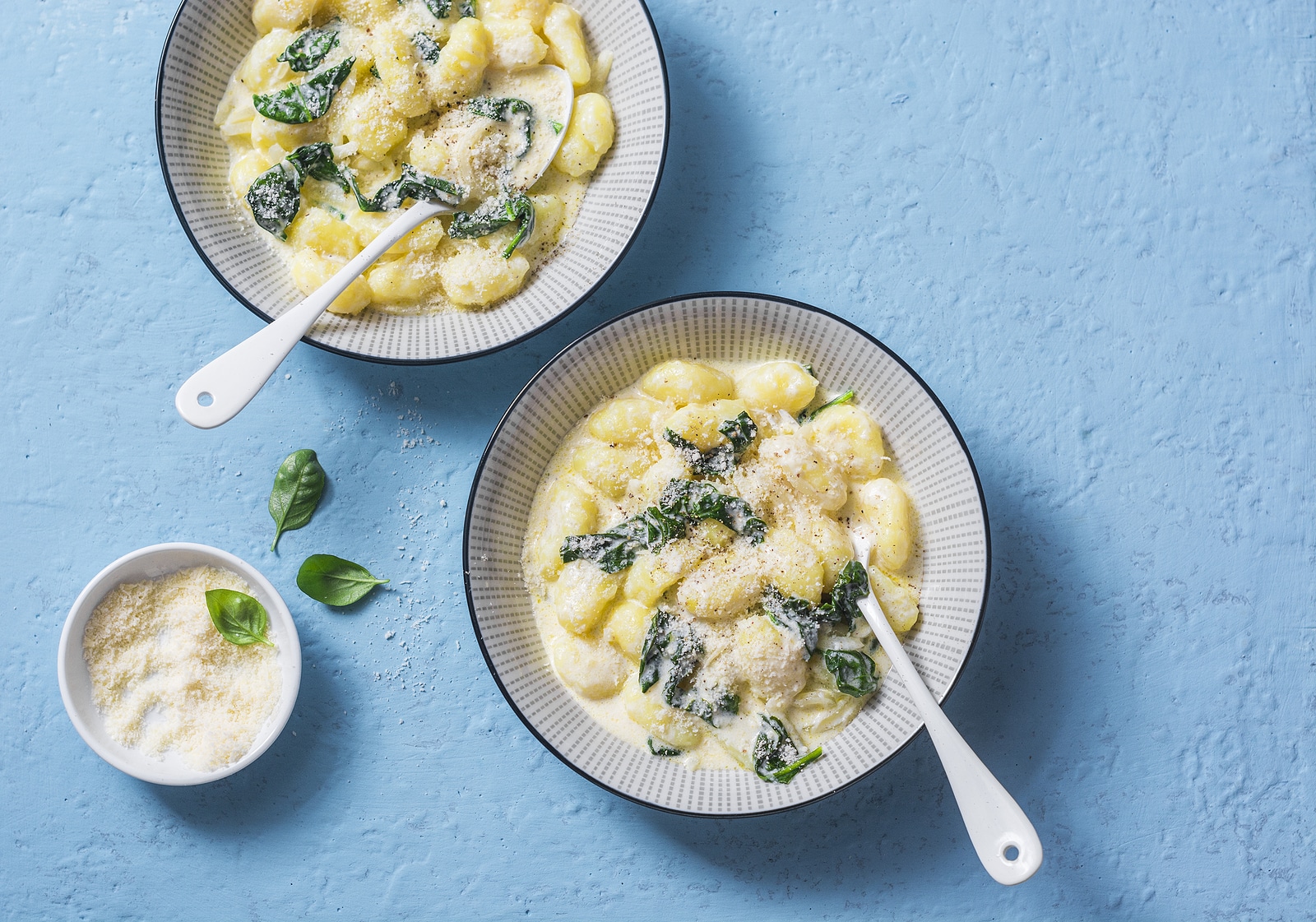
- Mushroom Bolognese and Creamy Mushroom Gnocchi: Two extraordinary recipes from the PA Preferred Culinary Connection Recipe Book (pages 24 and 26) using a variety of mushrooms for rich, elegant pasta dishes.
Into the Future
Pennsylvania’s mushroom industry shows no signs of slowing down, which is a win for everyone. Klotzbach says, “Farming is a community, and mushroom farming is a very close-knit community. We all help each other out and need each other to get through each day. It’s a pretty great industry to work in.”
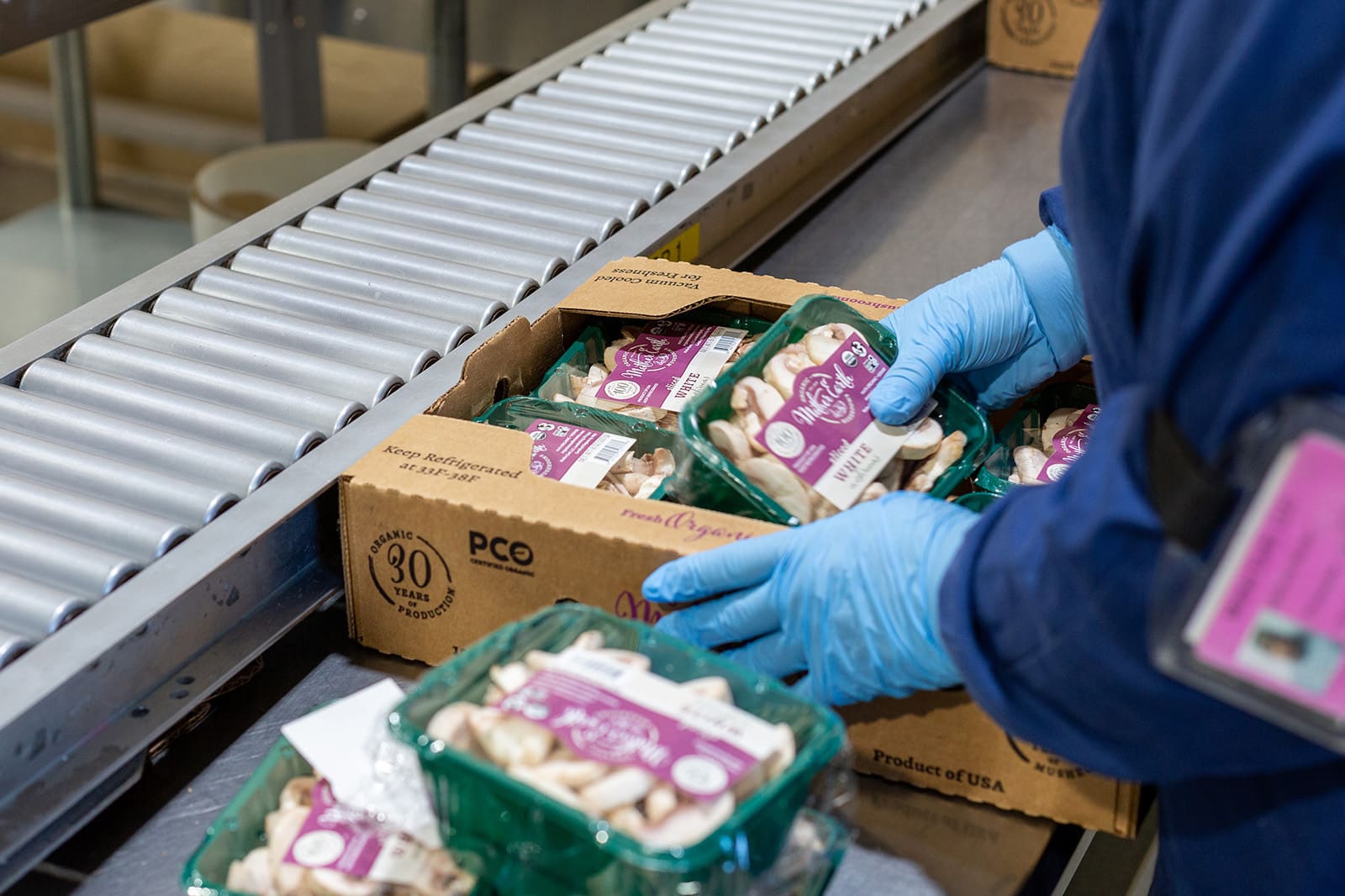
Beyond the rise of exotics varieties, Klotzbach also sees a steady shift toward organic products, something her family farm spearheaded in 1989. “We went to growing certified organic mushrooms, which was never done before.” As the first commercial organic mushroom farm in the country, Mother Earth helped to shape and define the complex organic mushroom program.
Likewise, Ferranto continues her mother’s legacy as a leader in mushroom farming. “My Mom thought it was important for people to understand mushrooms – how to use them and how to cook with them. So, when she started Buona Foods, she spent much of her time teaching people on the floor of the grocery store and in restaurants how to wash, clean and use mushrooms. We’re still doing that today.”
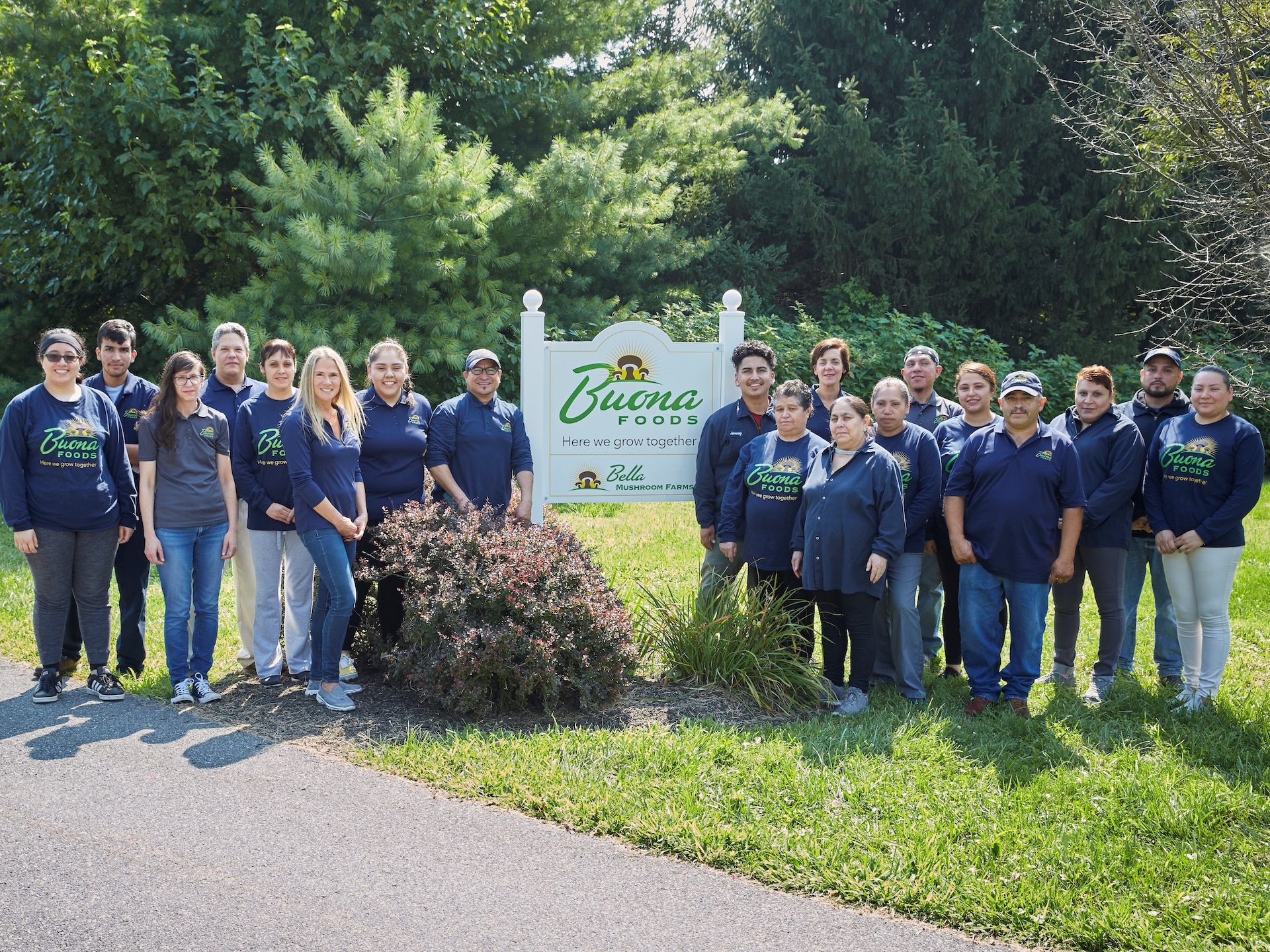
Ferranto is involved at the state level with the Pennsylvania Farm Show and as coordinator of Kennett Square’s iconic Mushroom Festival, a must-experience for any Pennsylvanian. She’s sure to include PA Preferred at the annual event to help people find ways to support their local communities. “It’s an opportunity to showcase what we do in Pennsylvania,” she says.
To find a PA Preferred mushroom farm near you, head here. You can visit Mother Earth’s Farm Store on weekdays at 740 Penn Green Rd., Landenberg; (610) 268-5904. Learn all about Buona Foods and its products on its website. And, the next time you’re in southeastern Pennsylvania , check out the Woodlands at Phillips mushroom museum and growing room!
This series was created in collaboration with PA Preferred.

PA Preferred® is Pennsylvania’s statewide branding program that promotes locally grown and processed food and other agricultural products.
- Feature photo: Phillips Mushroom Farms and Rebecca Dare Gray
- Photos 1, 8, 10: Bigstock
- Yeatman, Klotzbach, farmer with compost, assembly line and "crab cake" photos: Mother Earth LLC
- Harvesting and group photo : Buona Foods