We all need a village. When life inevitably throws its curveballs and challenges, even small gestures from the community around us can make all the difference. This is the ethos of Community Kitchen PGH, an organization founded on second chances and strategic, authentic support. Its multifaceted programs include free culinary job training and hunger relief to help people, not only get back on their feet, but to thrive.
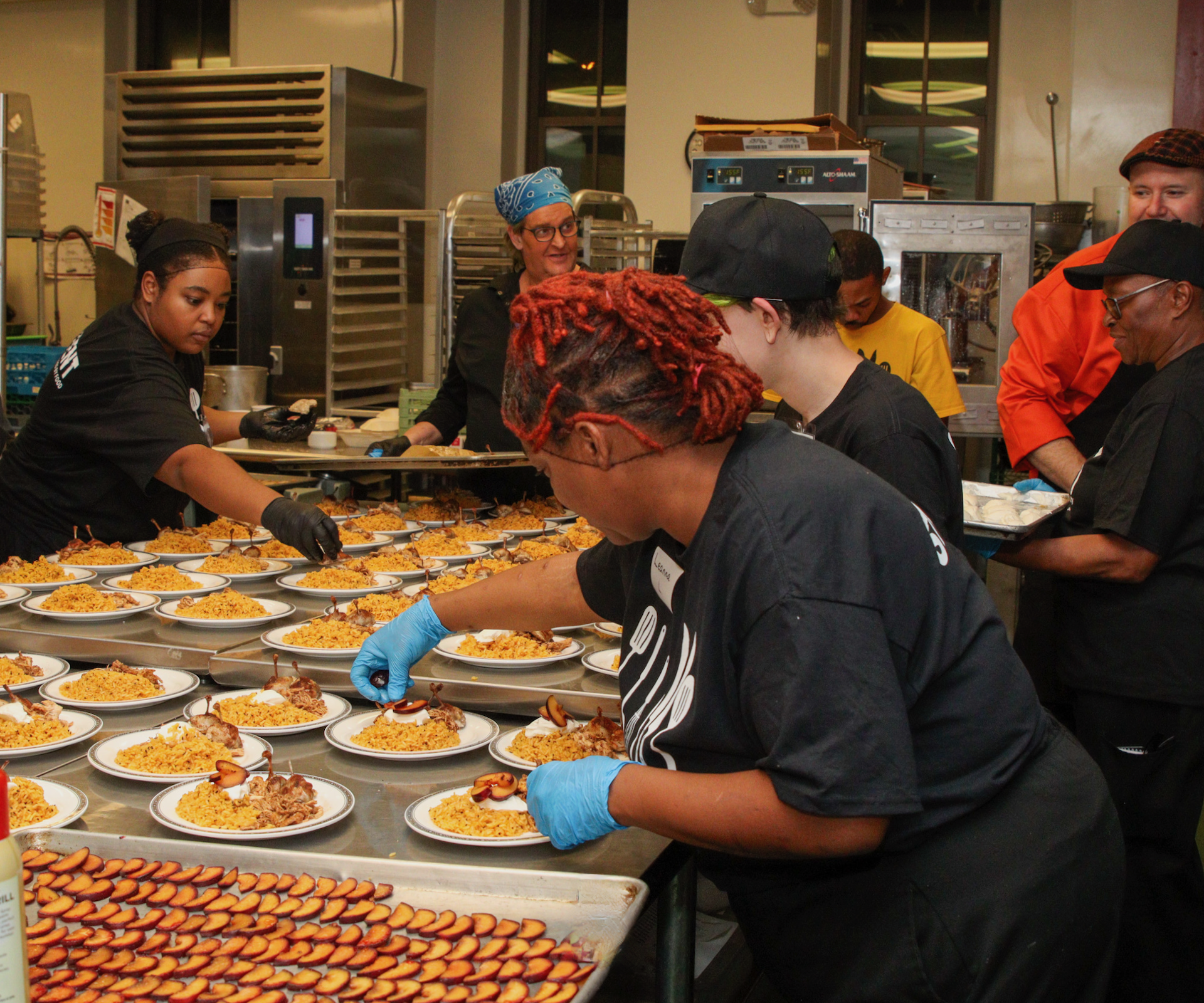
We sat down with Community Kitchen PGH Founder and Executive Director Jennifer Flanagan to learn more about the inner workings and profound impact of this incredible nonprofit organization in Allegheny County.
PA Eats: Could we start with the core mission of Community Kitchen PGH?
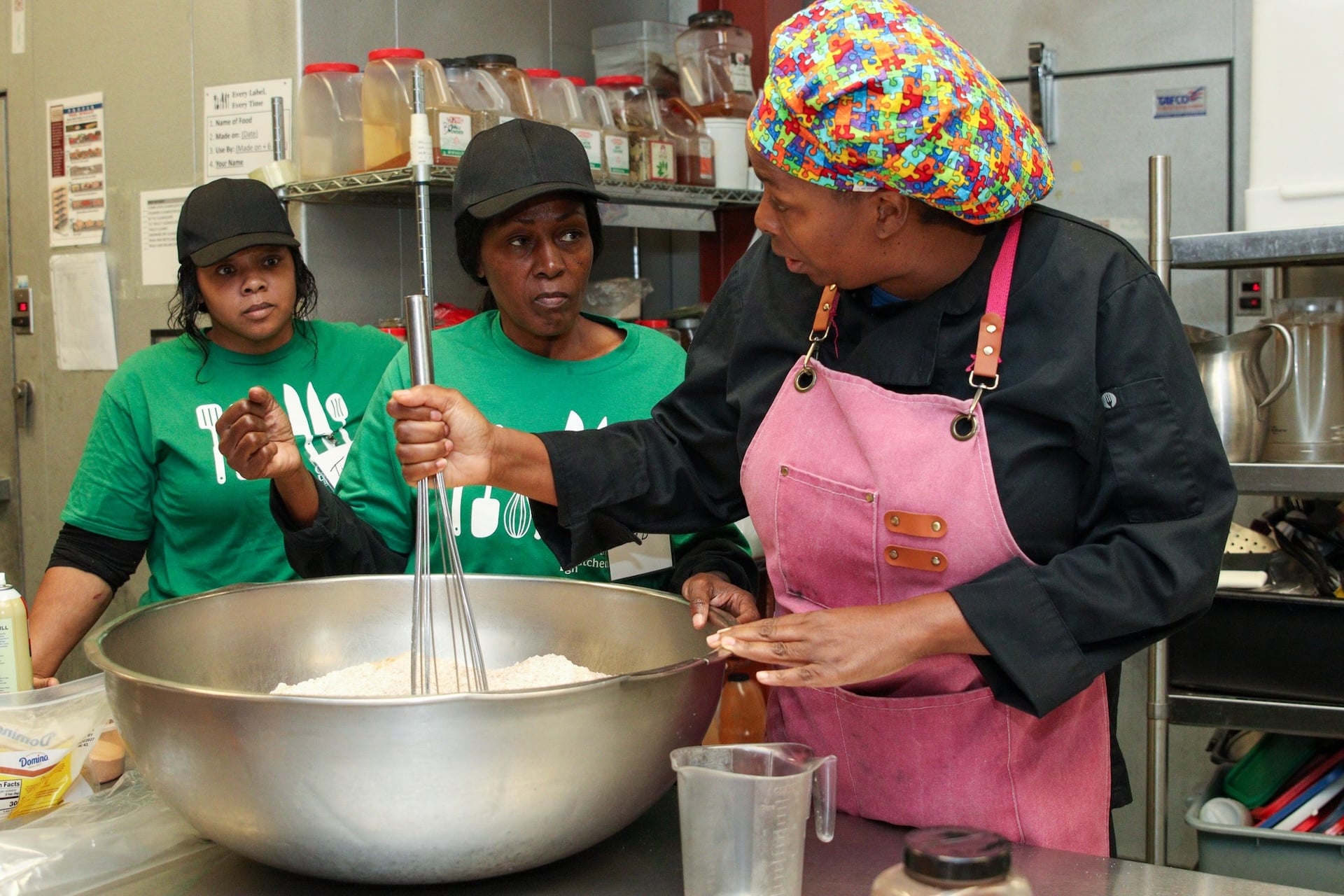
Jennifer Flanagan: First and foremost, we are a workforce development agency. That’s our foundational mission. We work with individuals overcoming barriers to employment. We train them and offer transitional employment for jobs in food and hospitality industry.
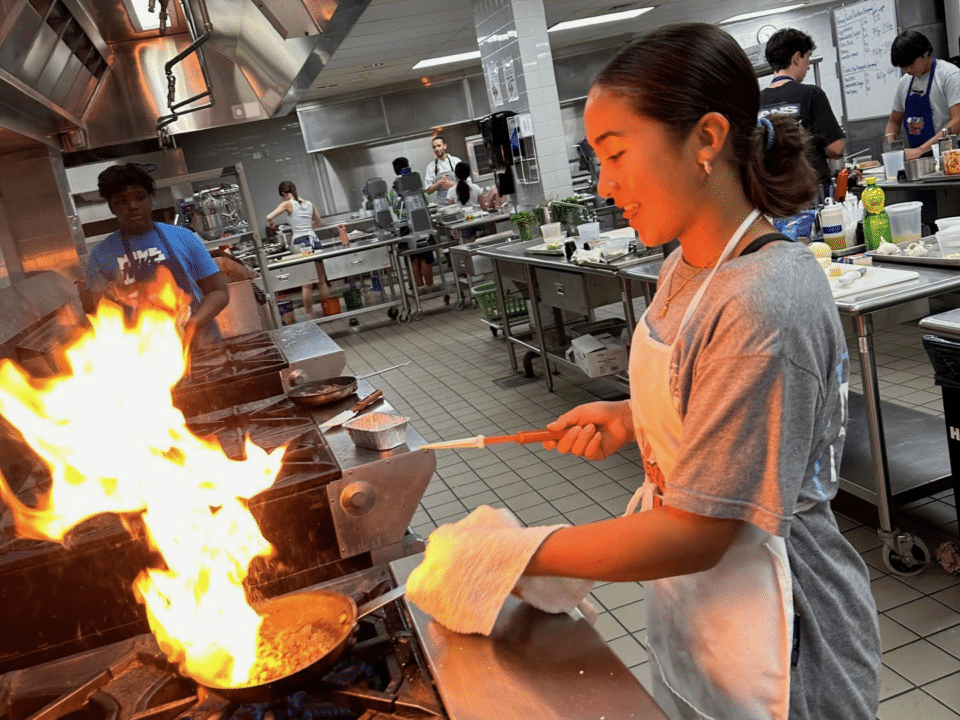
Chef Missy gives instruction
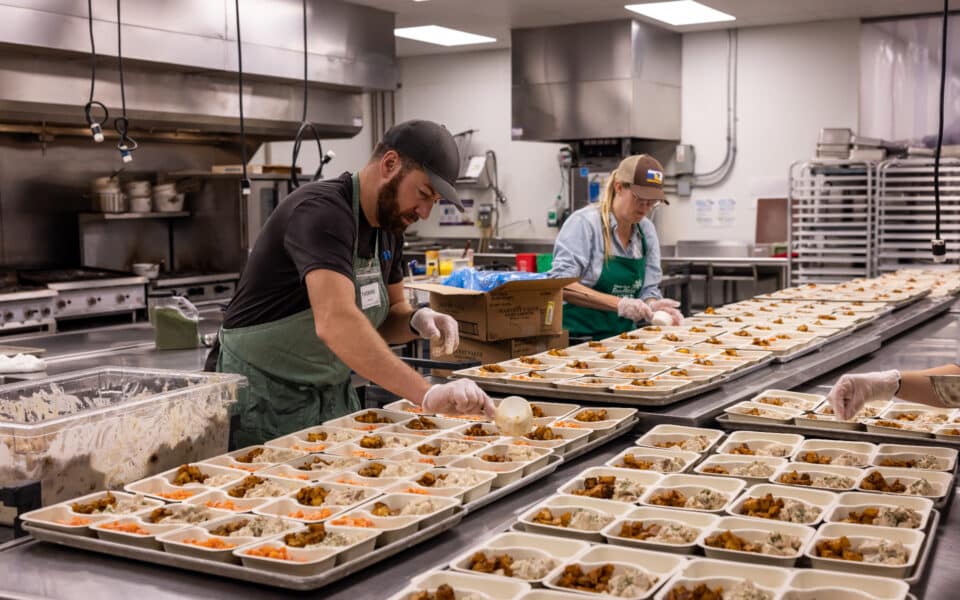
We ground this work in a working commissary kitchen, because it’s the best way to train people – and that’s the other part of our mission. We do what we call our community meals program, which includes after school meals and a summer food program for kids eligible for free and reduced lunch and breakfast under the Child and Adult Care Food Program. We also serve meals to area shelters and other nonprofits that run congregate food programs for people in need. We provide meals for some Meals on Wheels programs and other really innovative programs that pair meals with services like Hello Baby, which provides meals for new moms designated at-risk by the county, paired with case management visits and opportunities to engage with other services. I love that program because, when I had my first kid, all my neighbors made me like six weeks worth of meals, and it was the most wonderful present ever.
The other program is a small family foundation that provides support for families of people undergoing things like heart failure or heart transplants. Sometimes people have to take a leave of absence to stay with their person during treatment at the hospitals here in the city, so the foundation provides what they need to keep going. We provide meals for the caregiver while they’re in town and also discharge meals that are heart-healthy.
What are other important facets of the organization?
We run some retail businesses to, again, provide real-life training and bring revenue back into our programming. Students are integrated into all of these enterprises, which cover about 60% of our operating budget. The rest is charitable support.
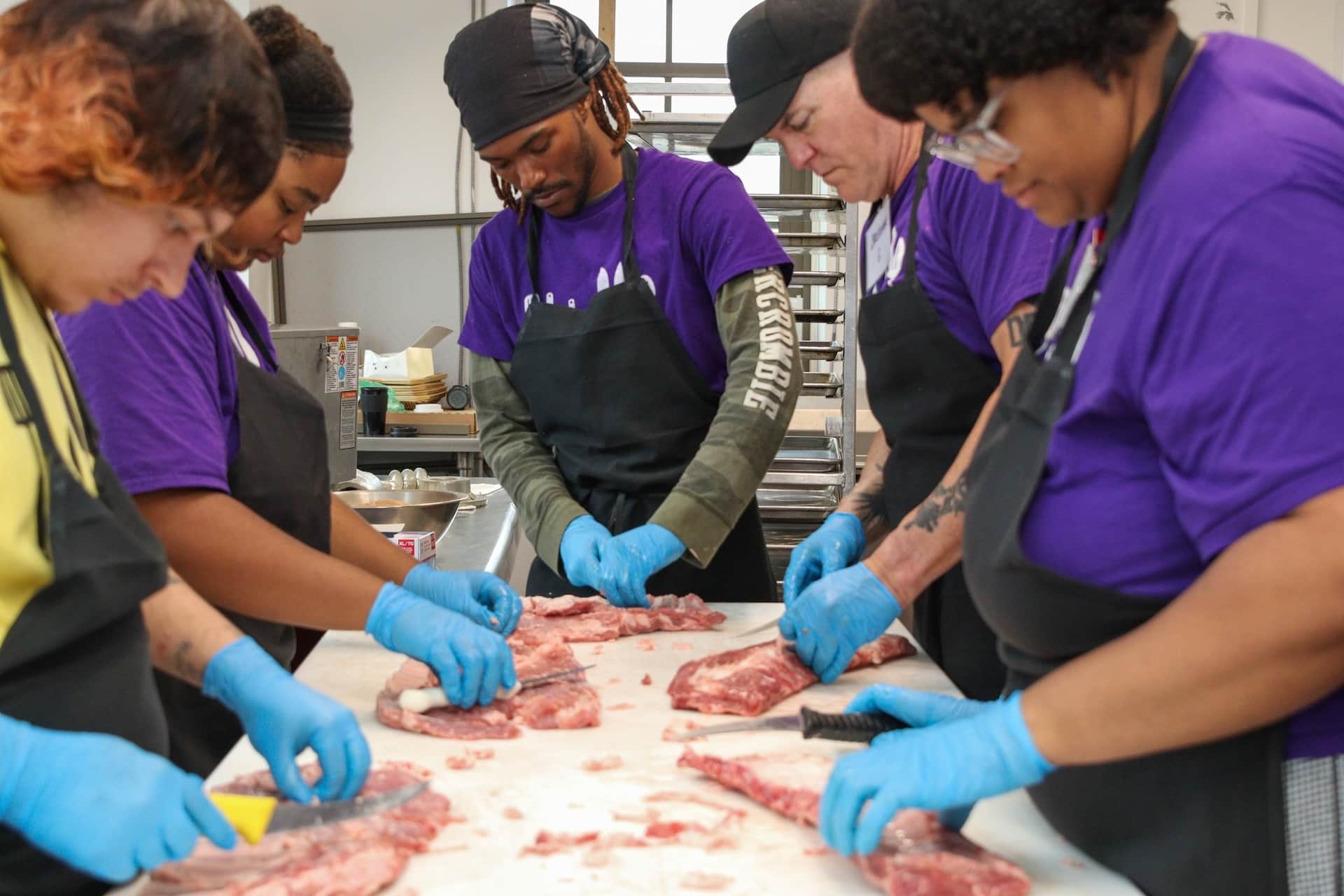
We have a catering business and a food truck, and we do retail events. We have a butcher unit and can sell direct to the public. We source locally, train people on meat cutting and make our own products — bacon and sausage and burgers and all of that.
The businesses provide programmatic revenue for our costs, which are high because we do wraparound support for our students. They get a stipend while they’re here and we put money into a savings account once they secure employment. We give them $1000 once they have a job for 30 days because we know that so many of the folks that we work with don’t have savings and a car repair or a minor hour repair can derail you, right? So we wanted to invest in a savings account for them.
We provide uniforms, daily meals, bus passes and whatever students need to make sure that they can get here every day. Then we work with them to clear out whatever barriers we can and get them stabilized. Sometimes that’s, “Let’s get you a driver’s license.” We have students who didn’t have anybody to teach them how to drive and it can be a barrier to employment. We also have people who lose their ID. We work with people that are transitioning out of homelessness or domestic violence situations, who left with nothing. We track back and get their birth certificate, their social security and get their documents together so that they can work again. And we have kids that age out of foster care.
We follow folks for a year after placement so that we can continue to help them move up. If they haven’t gotten a raise and they should have or they’re ready to move to a bigger job, we will help them do that. We’ll also continue to provide bus passes for six months. We would rather have you spend that $100 a month somewhere else or save it.
It’s all integrated back into the community meals work. So many of the people that are making these meals were in those places that we are serving. We’ve had students that say, ‘My kid goes to that after school program’ or ‘I used to be in that shelter.’ So it’s very meaningful to be learning a new trade and learning learning a craft while also giving back. It’s part of the model that we we try to promote here — the idea of community. Especially now, with everything that’s happening in the world. Food is community in so many ways. It brings people together. It provides both a livelihood and a lifeline for people.
About how many people do you have in the program at one time?
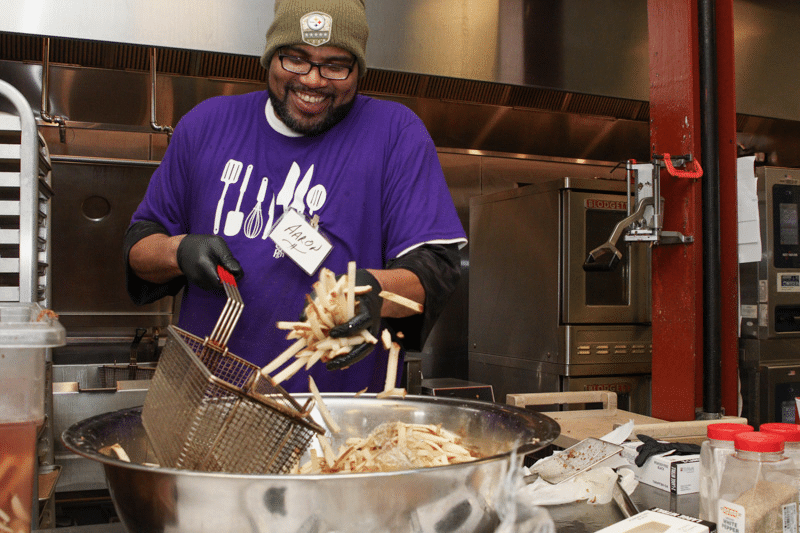
We bring new cohorts in about every month. We have people leaving and people coming in all the time. An average number is 15-20 people that are actively training. And, like I said, we try to meet you where you are. So, if you have to work and can’t take the full three months to train, we’ll work with you to get a job faster.
We’re doing around 2,000 meals a day, so it’s a lot of food we’re pushing out of here. We always like to say, “If you can manage in this kitchen, you can work anywhere.”
The annual Fish Fry
During Fish Fry in 2025, which is such a popular thing in western PA, we sold a little over 6000 pieces of fish. We have 700 – 800 people coming through every Friday. Some of our students love it and sometimes they say, “Oh my gosh. I do not want to work in a big, busy restaurant. Give me a job in the back of the house.” It’s a good way for them to test the waters.
What’s your facility like?
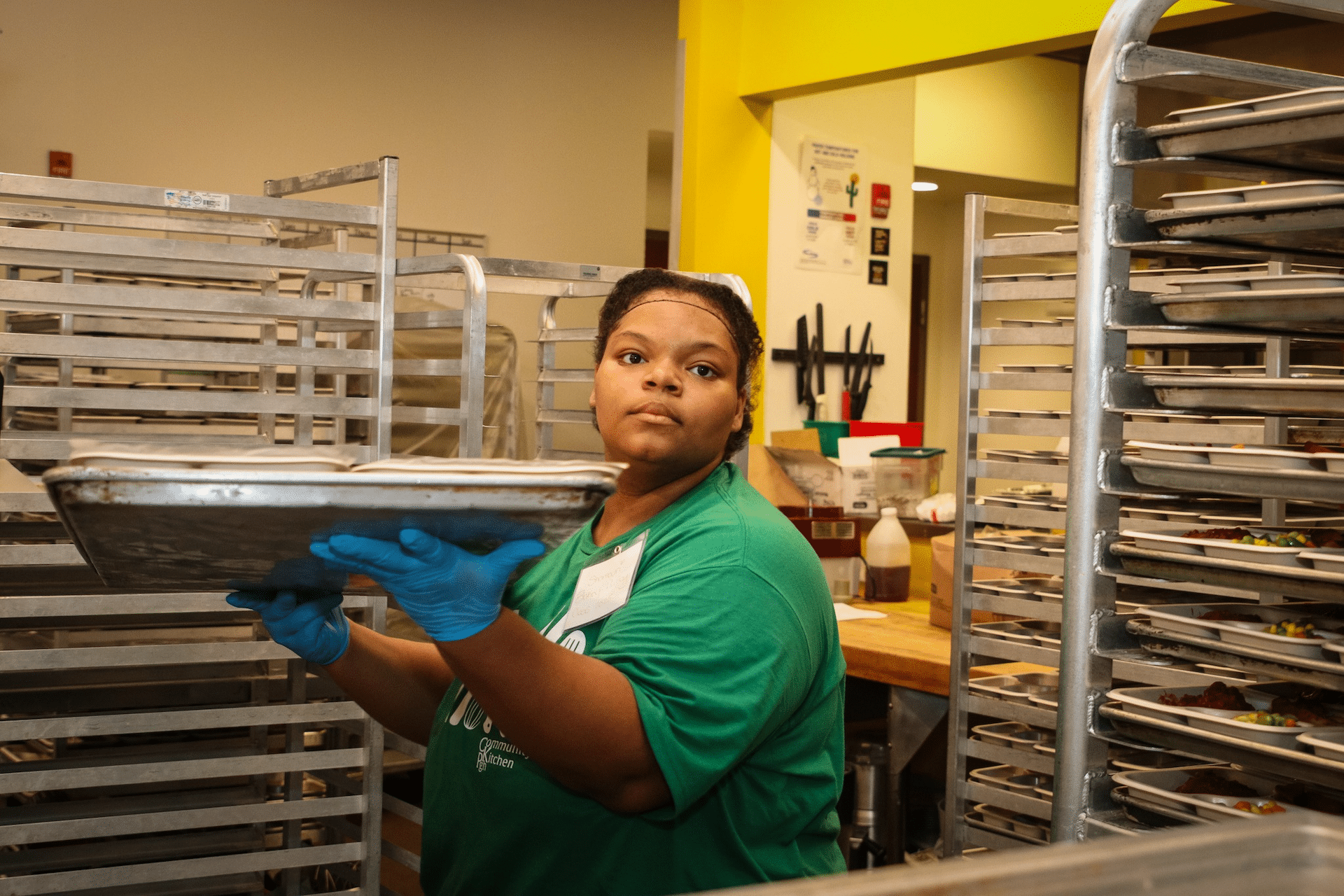
We are over in Hazelwood. It’s a big commercial kitchen that’s set up for training, so it’s a little bit more spacious in the sense of having room in between things. We are trying to expose people to all the different things they might experience when they go and work in a restaurant. We have a font line and a back line with equipment that’s set up for catering versus high volume. We have large tilt skillets, steam kettles, blast chillers and combi ovens, but also old school fryers and and grills and all of that.
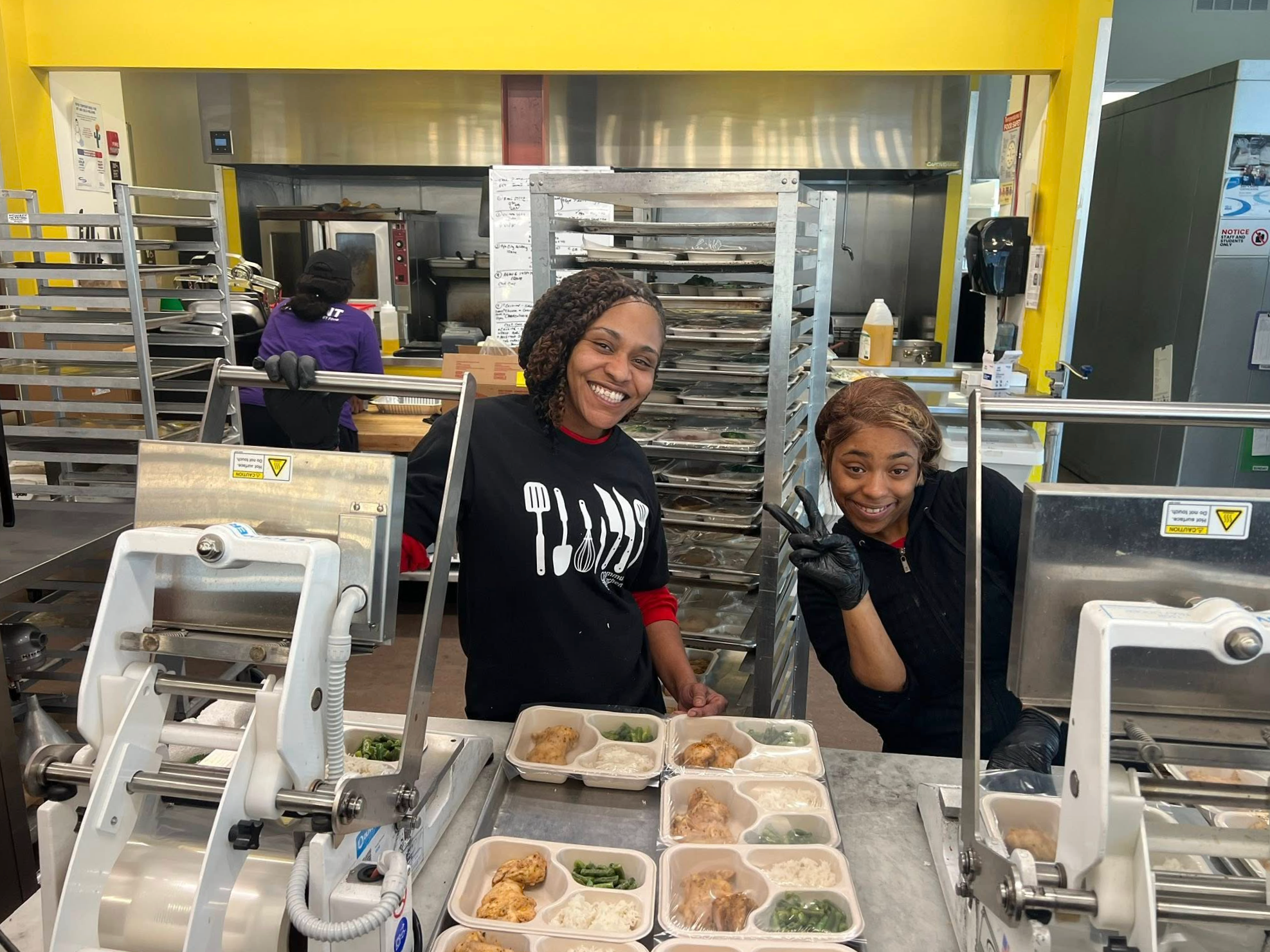
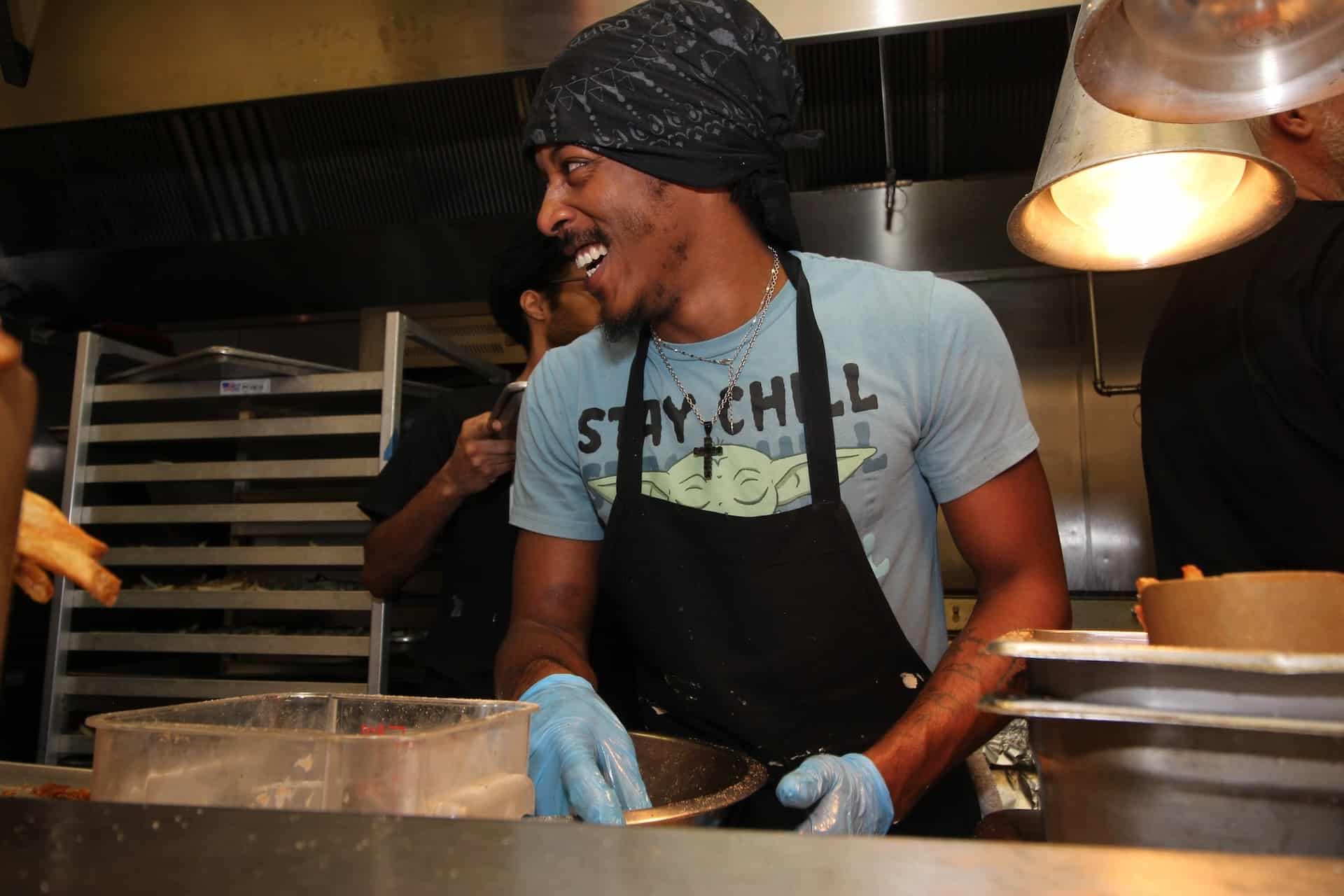
Students Kia, TJO and Quay sealing meal trays for a local shelter
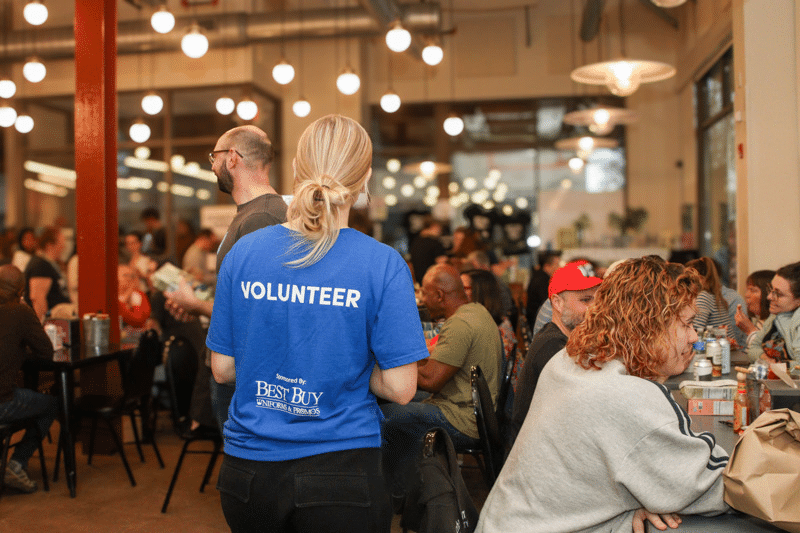
We use the whole first floor here in Hazelwood for production and packing out meals, but then once a month we have a guest chef event. We work with chefs in the community and do ticketed dinners to invite people in to see what we do. For those, and for the fish fry, we flip the production area into a dining room. It’s a nice way to let people really see what we do every day.
On the second floor, we have classrooms. We sort of follow the 80/20 rule — about 80% of the time our students are working and learning in the kitchen, but we offer some classes, too. We do industry certifications like ServSafe Food Manager & Handler and we use the National Restaurant Association curriculum called Restaurant Ready. We also partner with Literacy Pittsburgh to do kitchen math classes. Everybody gets those because, I don’t care who you are, you’ve forgotten your fractions by the time you get here. We do financial literacy. We partner with Dollar Bank to teach financial literacy because a lot of times our folks don’t know how to read a pay stub or they don’t really know how credit works. People have dreams of opening their own catering business and we’re like, ‘The first thing you’ve got to do is learn how credit works.’
We’ve outgrown this building a little bit, so we’re trying to figure out how to expand. We’re bursting at the seams. But the Hazelwood community has been really good to us. It’s a nice community to be in.
How do you connect with students? Do they find you, do you find them or is it a mix?
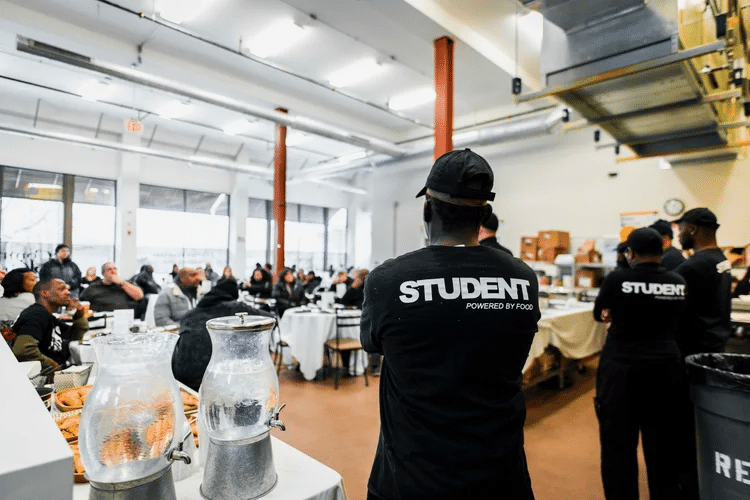
It’s a mix. We have really good relationships. We actually do classes inside the jail and have people that exit to us. We work with the diversion courts, we get people referred to us and we do a lot of recruitment through other nonprofits. There’s also a lot of word of mouth. People say, “Oh, my cousin went here.” We actually just had a mother and daughter graduate together.
Do you find that there’s more demand for training than you can meet?
It’s mostly a financial issue because we offer so much support for our students. We do weekly stipends, bus passes and uniforms. If you’re trying to get an apartment, we will pay first month’s rent for you. A lot of stuff like that. So right now we can serve about 100 people a year with our budget, but I would love to increase that.
Do you have any data that shows your impact?
Yes. Our recidivism rate is around 5% and the state’s is around 27%. It’s a lot lower. We also have the average income for the folks that come in to Community Kitchen. The under-24 year olds come in averaging $500 a month and over-24s average about $700 a month. We’re getting them placed out at $17 to $18 an hour to start, which is around $2700 to $3000 a month.
The [food & hospitality] industry gets a bad rap. But we work with fantastic employers and it’s a really great industry for people that have been out of the workforce for a while. It’s very forgiving industry. If you show up, if you’re reliable and you want to work, you will move up.
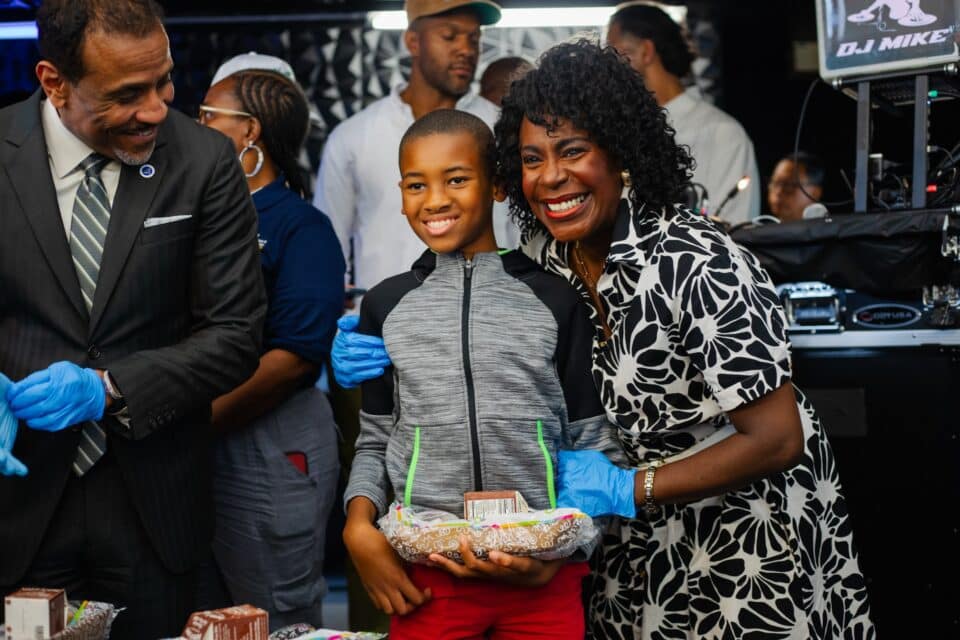
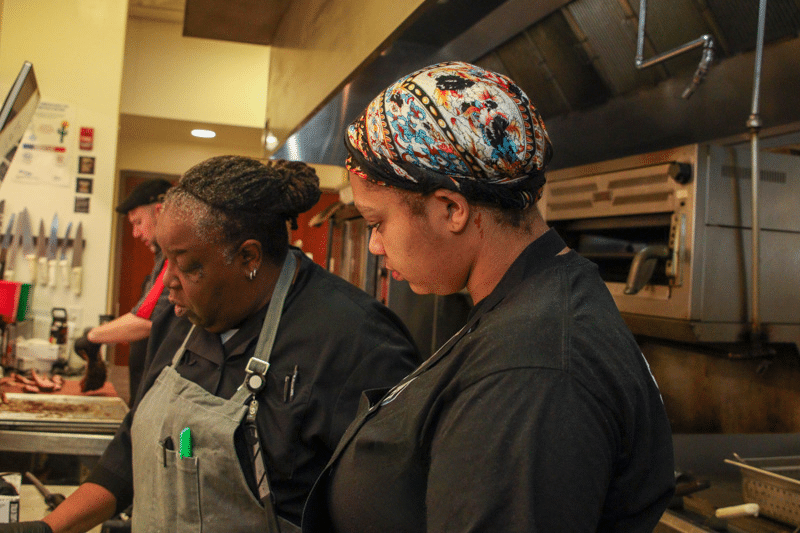
Chef Cory and Caress
What’s coming up for Community Kitchen PGH?
The annual Fish Fry runs from February 20th to April 3rd. Once it starts to warm up a little bit, we do festivals and farmers markets and things like that with the food truck. And, we’re lining up funding and figuring some more things out.
You know, our heads are always down and we’re always working. It’s nice to take a pause and talk about it a little bit.
Learn more about Community Kitchen PGH by visiting its website and following its Facebook and Instagram pages. Place an order for the annual Fish Fry Fridays while they’re happening, and keep tabs on the Guest Chef Dinner Series to enjoy these special events. You can support Community Kitchen through donation and volunteering. 107 Flowers Ave., Pittsburgh; (412) 246-4736.
- Photos: Community Kitchen PGH