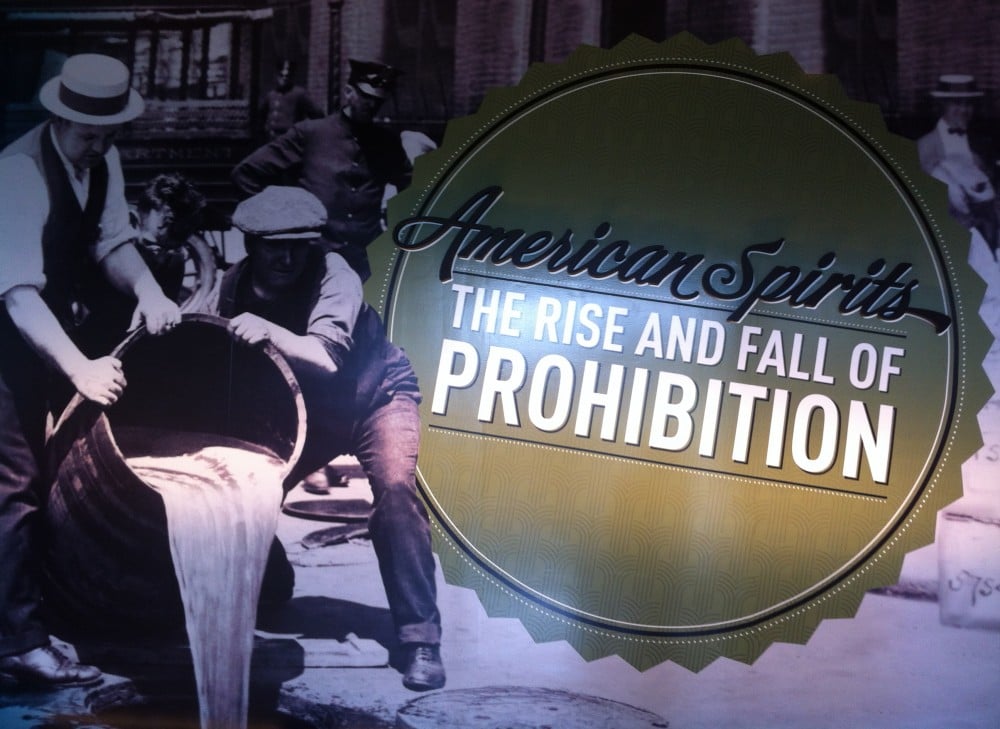
With all the political discussions about our freedoms recently, it was with great interest that I recently toured the evocative exhibit, American Spirits: The Rise and Fall of Prohibition. The show, at the Constitution Center in Philadelphia, runs through April 28.
Apparently, America has always loved her drink. Through a mix of artifacts and colorful signage, visitors learn about both the consumption and the abuse of alcohol from the earliest days of our country. Did you know Benjamin Franklin once wrote out 228 synonyms for the term drunk?
By 1830, “Americans over the age of 15 were guzzling seven gallons of pure alcohol each year.” Old growlers and alcohol bottles bring an authenticity to the historical details that explain how drinking was a continuous issue throughout the 1800s. Bar owners frequently gave away a free lunch consisting of saltines, pickles or other salty foods, all in an attempt to get patrons to drink even more early in the day.
The exhibit shows how the efforts to ban alcohol grew slowly over time, mostly driven by religious organizations. We learn about early advocates and the establishment of The Anti-Saloon League in 1893. Over the next two decades, the ASL grew into a powerful lobbying group that put political pressure on lawmakers. One of the most interesting parts of the exhibit visually shows how ASL Leader Wayne Wheeler proved to be a shrewd lobbyist, building enough clout that politicians feared they would lose re-election without the ASL’s support.
On January 17, 1920, the 18th Amendment was enacted, and the United States became dry. Allegedly. Americans could “no longer manufacture, sell or transport intoxicating beverages.” Technically, consuming liquor was still legal. Loopholes included preserved fruit, Sacramental wine and medicinal alcohol.
The 18th Amendment did not specifically outlaw the consumption of alcohol, but focused on the “making, distribution and sale” of intoxicating liquor. There’s an interesting visual that reveals how the wording of the proposed amendment was subtly changed throughout the process. The specific language “intoxicating liquor” was so vague that many people, including some lawmakers, thought beer and wine would not be included. The subsequent Volstead Act instead defined intoxicating liquor as anything that was at least one-half of one percent alcohol.
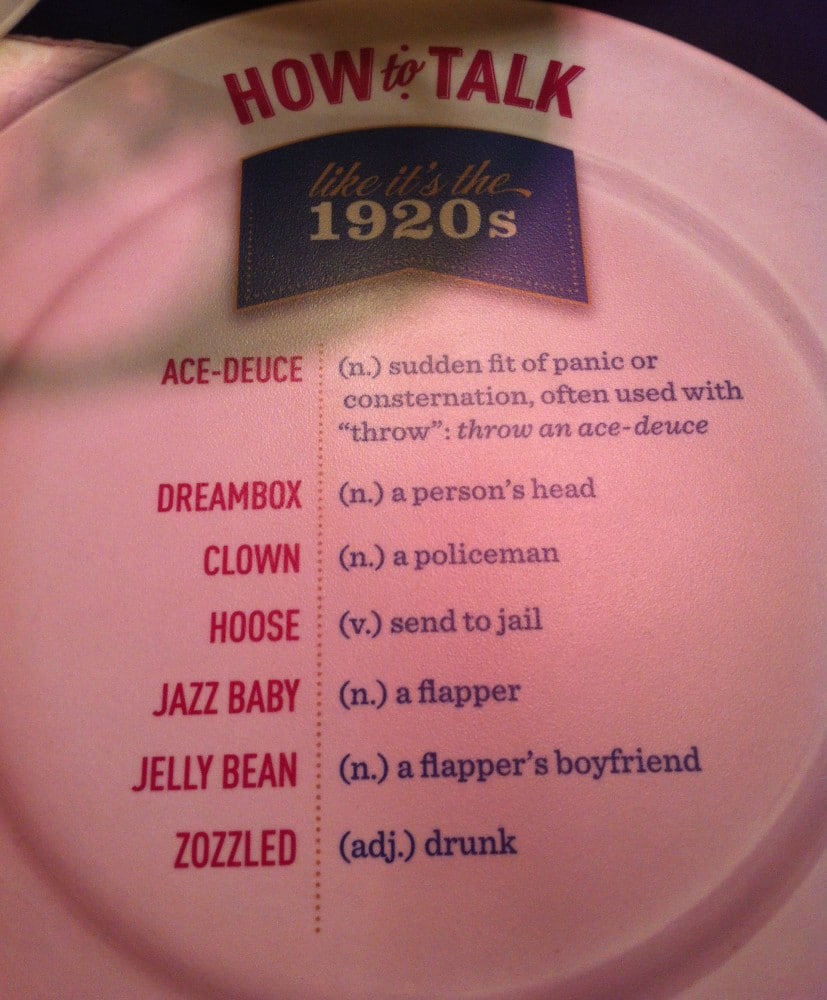
Once Prohibition hit, legitimate businessmen were left to find new ways to earn a living, while moonshine and ciders were increasingly concocted out in the countryside. Maps depict the routes used by rum runners who snuck in liquor along the New Jersey coast. A reproduction of a Speakeasy, complete with a bar, tables and a dance floor with an outline of popular dance steps, explains how the underground counterculture was established, with many law enforcement officials being paid to turn a blind eye.
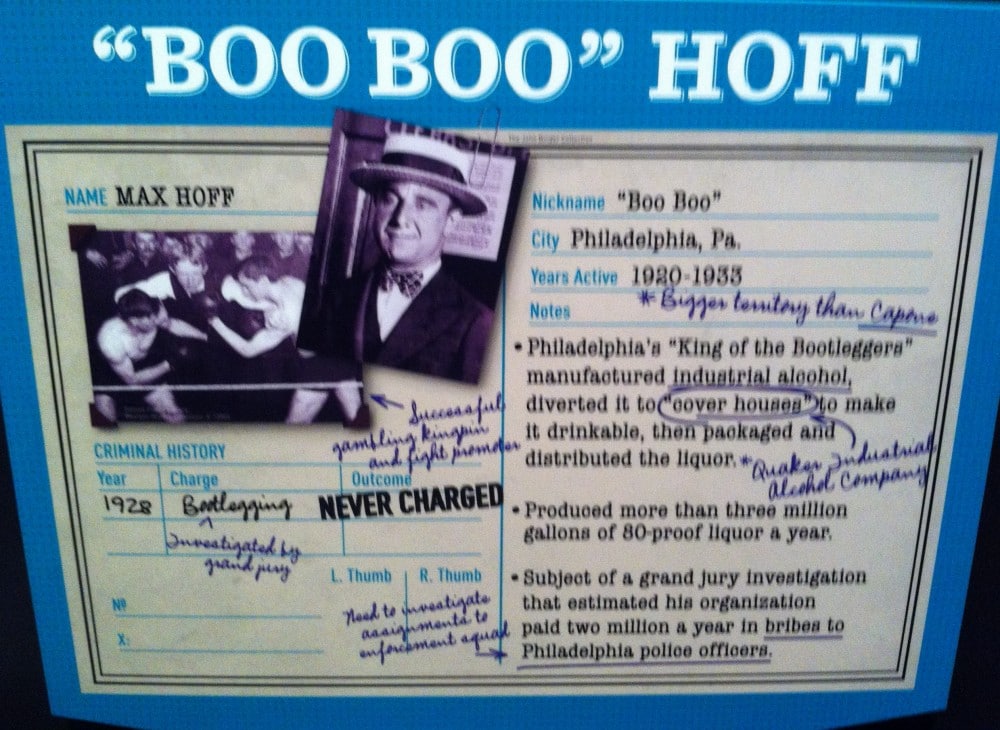
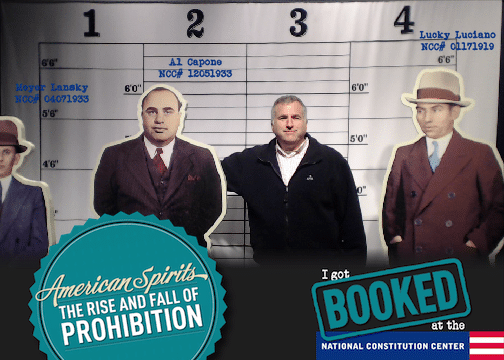
Mug shots, newspaper headlines and police reports detail how crime and corruption flourished, and show how Americans grew cynical about government and the enforcement of these laws. One of the interactive exhibits gives people the chance to have their photo taken in a police lineup with Al Capone and Lucky Luciano.
After 13 years of continuing corruption and violence, culminating in the St. Valentine’s Day Massacre, Americans demanded an end to Prohibition. The dry era ended with the passage of the 21st Amendment in 1933. Unfortunately, this final part of the story, the repeal of Prohibition, was not covered as extensively as the years leading up to the dry era, though a cool black and white short film details the day prohibition ended, with a keg being delivered to New York City Mayor Al White.
American Spirits: The Rise and Fall of Prohibition runs through April 28 at the Constitution Center. Since we know you will be thirsty at the end of your tour, here’s a link to last year’s article on a Center City pub crawl, which includes a few prohibition themed bars. Another spot to quench your thirst is the Prohibition Taproom, located at 501 N. 13th Street, Philadelphia; (215) 238-1818.
Photographs credited to Jim Breslin.