I know what you’re thinking: Who has time to bake their own bread, when you can pick up a fresh artisan loaf at the local farmer’s market or store?
You do have time. Especially with this no-knead version I’m about to share with you. Trust me. You can’t screw this up.
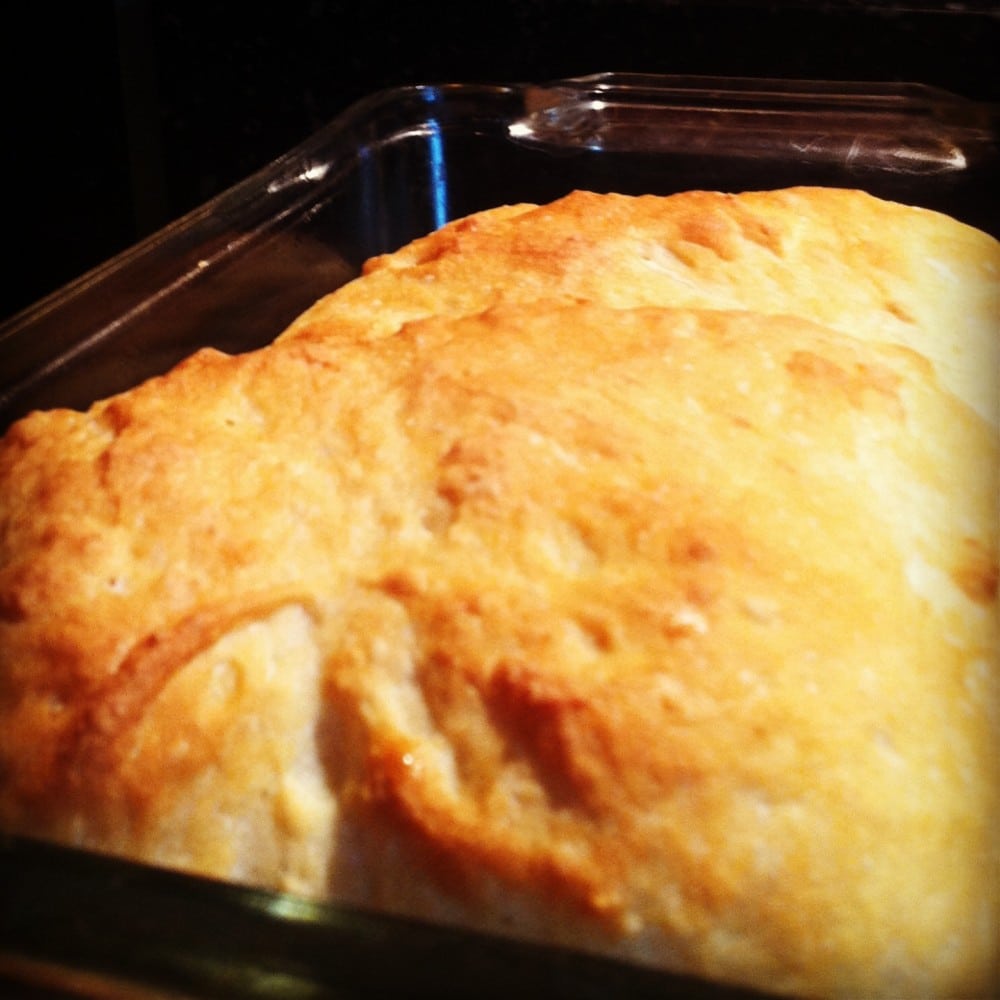
As I write this, the aroma of baking bread is swirling through the house. And the delicate, golden loaf that’s the result is so much fresher and better tasting than anything you could buy.
The trend of no-knead bread first arose (no pun intended) back in 2006 when the New York Times’ Mark Bittman penned this article and recipe. I encourage you to make this European-style boule—light and airy with a hard chewy crust. There’s no work involved, but there is a long rise time involved.
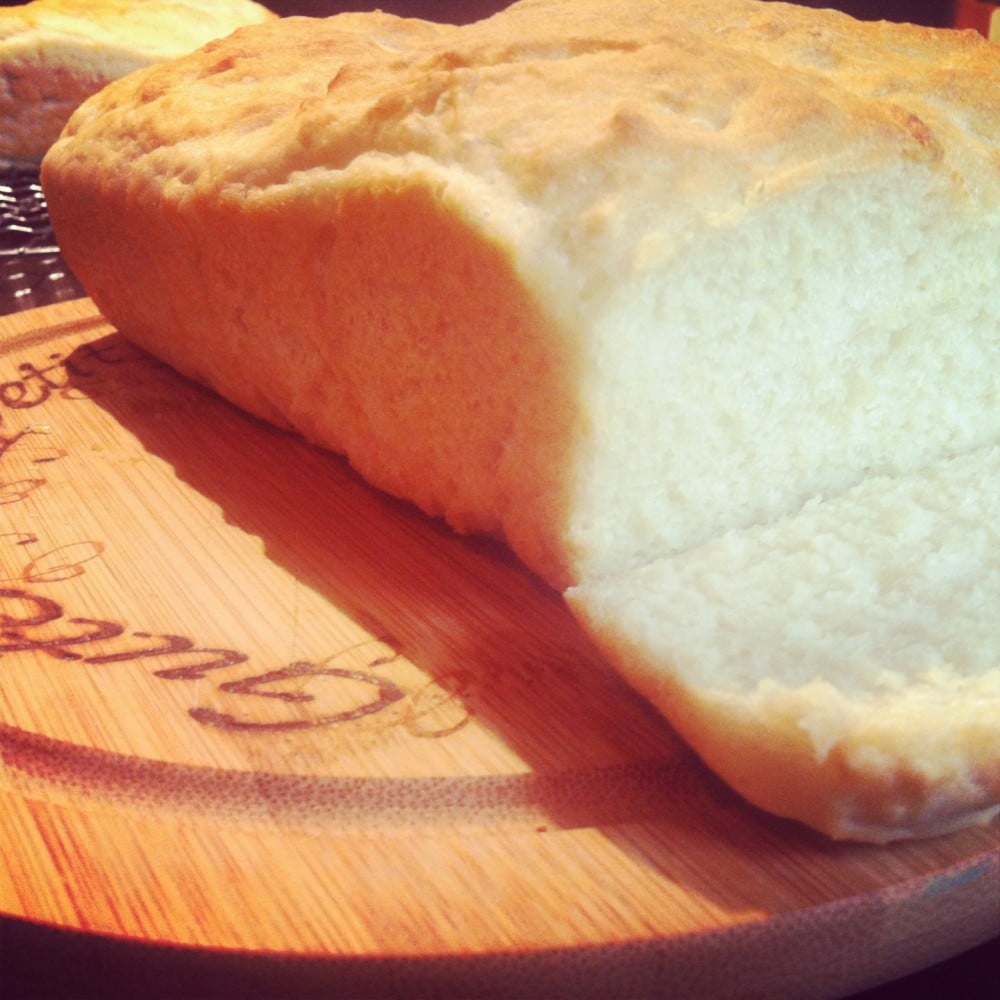
But if you need instead bread gratification, take on this recipe I’m about to share with you. This loaf-style peasant bread is softer, but can be used in so many ways. Garlic bread. French toast. Sandwiches. Strata. Panzanella Salad. Or how about fresh out of the oven? I ended up freezing my leftovers to use for dinners in the coming weeks.
If you search for “no-knead breads” you’ll find all kinds of varieties and recipes online. This one comes from the blog Alexandra’s Kitchen. It’s a recipe obviously near and dear to her family. If you check out the original post there are lots of tips to glean. Here, find the abbreviated version.
No-Knead Peasant Bread
Ingredients
- 4 cups (1 lb. 2 oz) all-purpose flour (do not use bleached all-purpose)
- 2 teaspoons Kosher salt
- 2 cups lukewarm water
- 1 tablespoon sugar
- 2 teaspoons active-dry yeast
- Room temperature butter, about 2 tablespoons
In a large mixing bowl whisk the flour and the salt. In a small mixing bowl, dissolve the sugar into the water. Sprinkle the yeast over top. Let it stand for about 10 to 15 minutes or until the mixture is foamy and/or bubbling just a bit—this step is just to ensure that the yeast is active. Gently stir it up and add to the flour bowl. Stir this mixture up with a spatula or wooden spoon. Mixture will be wet.
Cover bowl with a tea towel or plastic wrap and set aside in a warm spot to rise for at least an hour. It usually takes about an hour to double in bulk, but letting it rise for an hour and a half or up to two hours is fine.
Preheat the oven to 425ºF. Grease two oven-safe Pyrex bowls (approx. 1 L or 1.5 L or 1 qt or 1.5 qt) with a tablespoon of butter each. Using two forks, punch down your dough, scraping it from the sides of the bowl, which it will be clinging to. As you scrape it down try to turn the dough up onto itself. Take your two forks and divide the dough into two equal portions. Then scoop up each half and place into your prepared bowls. Let the dough rise for about 30 minutes or until it has risen to just below or above (depending on what size bowl you are using) the top of the bowls.
Bake for 10 minutes. Reduce the heat to 375º and bake for 22 to 25 minutes longer. Remove from the oven and turn the loaves onto cooling racks. If the loaves look a little pale and soft when you’ve turned them out onto your cooling racks, place the loaves into the oven (outside of their bowls) and let them bake for about 5 minutes longer. Remove from oven and let cool for 10 minutes before cutting.
Photo credits: Laura Koster.