When Emily Foster decided to go plant-based, she stumbled upon barriers in the vegan market that she just had to solve for herself. For one, there weren’t a lot of tasty protein substitutes available, so she made her own. She also greatly missed her treasured comfort meals, many of which used meat, so she began to “veganize” those recipes with meat alternatives. These solutions became the foundation for what’s now a flourishing vegan meat company, Self-Reliant Seitan.
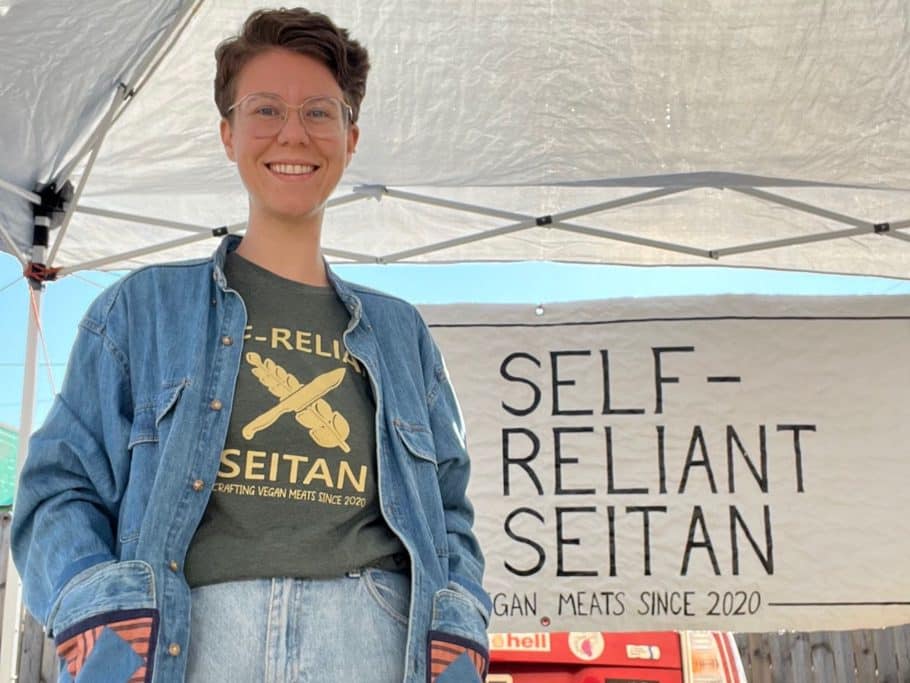
Foster produces a range of seitan products, also known as “wheat meat,” that allows home chefs in the Pittsburgh area to enjoy flavorful, protein-rich meat alternatives, whether for a plant-based boost or as part of a vegan lifestyle. It includes seitan alternatives for ground and shredded chicken and beef, bacon, maple breakfast patties, steak, pepperoni, chorizo, salami and much more. Foster shared two of her favorite seitan recipes with us – tangy, saucy Sloppy Joes and delightful “chicken” potpie made with spring vegetables – that you can try at home! Read on to learn all about this Pennsylvania maker’s journey as an entrepreneur who is strengthening the local food chain with small batch, plant-based protein.
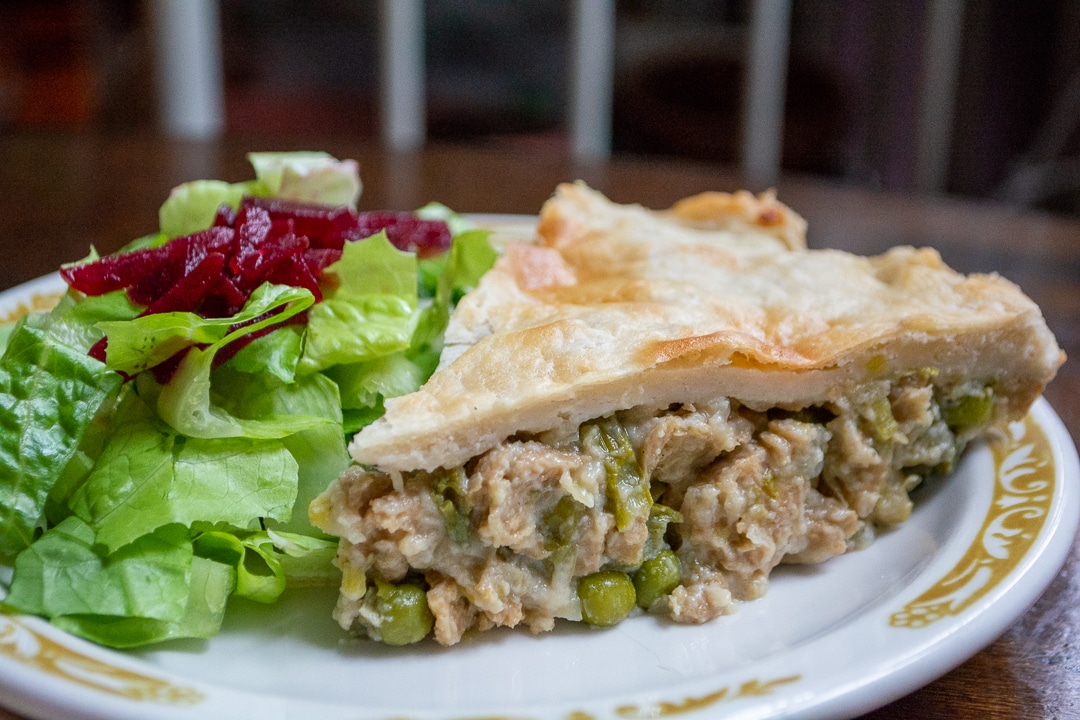
Self-Reliant Seitan potpie
PA Eats: Could we start with your background and how you got into this enterprise?
Emily Foster: Sure. I started making seitan for myself in 2015. I was eating meat-alternative it from an environmental standpoint. I was looking into the zero-waste movement and being plastic-free and it was very appealing to me that I could make my own protein at home rather than buy meat, which often comes in styrofoam and plastic.
I also moved to Pittsburgh during my undergrad time, so I was learning to cook for myself and starting to really enjoy it. Seitan offered a creative outlet for cooking. It’s very versatile – you can use all different seasonings, make it into shape and replicate a lot of different meats with it. I really enjoyed that creative aspect and was experimenting with it for several years.
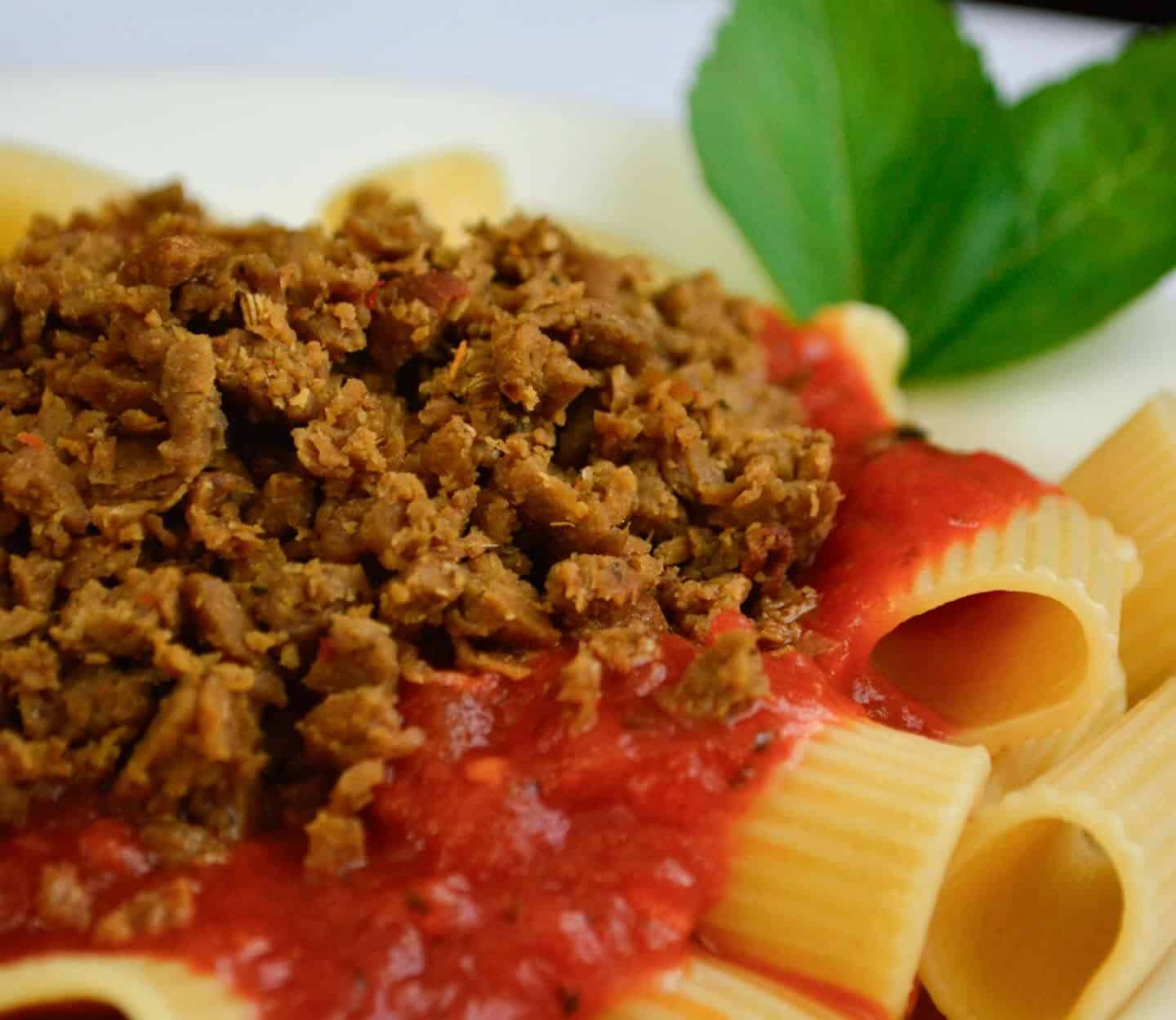
Ground seitan sausage on pasta
In 2020, when a lot of people were soul-searching in lockdown and starting businesses, I asked a vegan friend why she didn’t make seitan more often. She said, ‘You know, it takes a few hours to make and then it’s better if you let it cool for a day.’ The process is very time consuming. But she told me that, if I made it, she’d be happy to buy it from me. So that was the spark and made me realize I had an opportunity with something I love doing, I’m good at and I’d love to provide for other people.”
It seems that the plant-based, vegan scene is pretty strong in Pittsburgh. Did you find an immediate demand?
Yes, there is a strong vegan presence. Though, there’s not a lot of vegan restaurants and we’ve had a few close within the past five years. There’s definitely room for more.

Seitan corned beef Reuben
I started with a Google form – literally, an online Google form – where people could sign up for delivery. The demand was there right away and snowballed very quickly. During the 1st year, I also did VegFest, which is a really big, local vegetarian/vegan festival in August. People and vendors from as far as Florida drive up for it. I made as much seitan as I could and sold out of almost everything. So that was a cool first market experience and a lot of exposure too, with other vegan businesses and customers.
But yes, the demand is here. No one else is doing what I’m doing. It’s definitely a gap in the market that I’ve found. There are local restaurants who have seitan on their menu, but the unique thing about Self-Reliant is that we sell it packaged for people to take home and cook with. The idea is that it really becomes an easy staple to use in meal planning.
We do mostly do farmers markets, and I’ve found a warm reception and a lot of excitement at farmers markets because there usually isn’t protein for plant-based people. You often see local meat, fish and eggs. So it’s a nice complement to what was is already offered at the farmer’s markets, but if you’re, if you are plant based or eating plant based, that you can meal plant at the farmer’s market and get everything you need.
Do you ship your products?
I do not ship. Part of part of our values as an environmentally-conscious business is not shipping. Seitan would need to be cold shipped, and that is pretty resource intensive.
What is seitan, actually, and how do you make it?
Seitan is a base protein made of wheat gluten. Gluten is actually the protein part of the wheat grain. So, you can remove the starch of the wheat from the protein. I get an 80% protein flour, a vital wheat gluten, and I use that as the base. Then you can add your seasonings and other flavorings to make whatever style of seitan that you want. Most of my varieties have beans in them. I blend up beans with spices and seasonings like soy sauce, nutritional yeast and water to make the wet part of the dough, and then add the vital wheat gluten, and it becomes quite a stiff dough. The wheat gluten is also what gives bread its chewiness and springiness, so that’s why it makes a great wheat substitute because it really has that chewiness of of wheat.
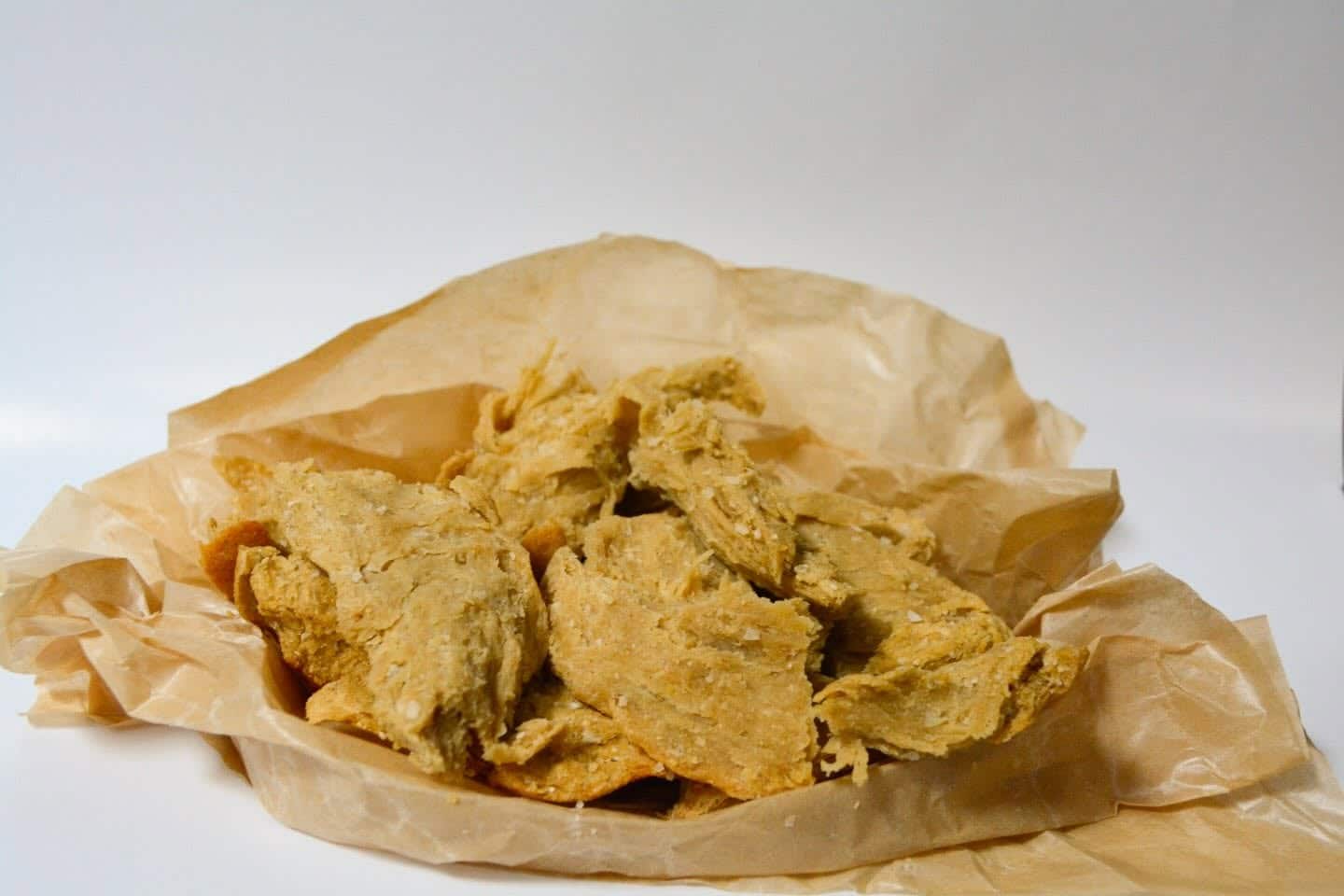
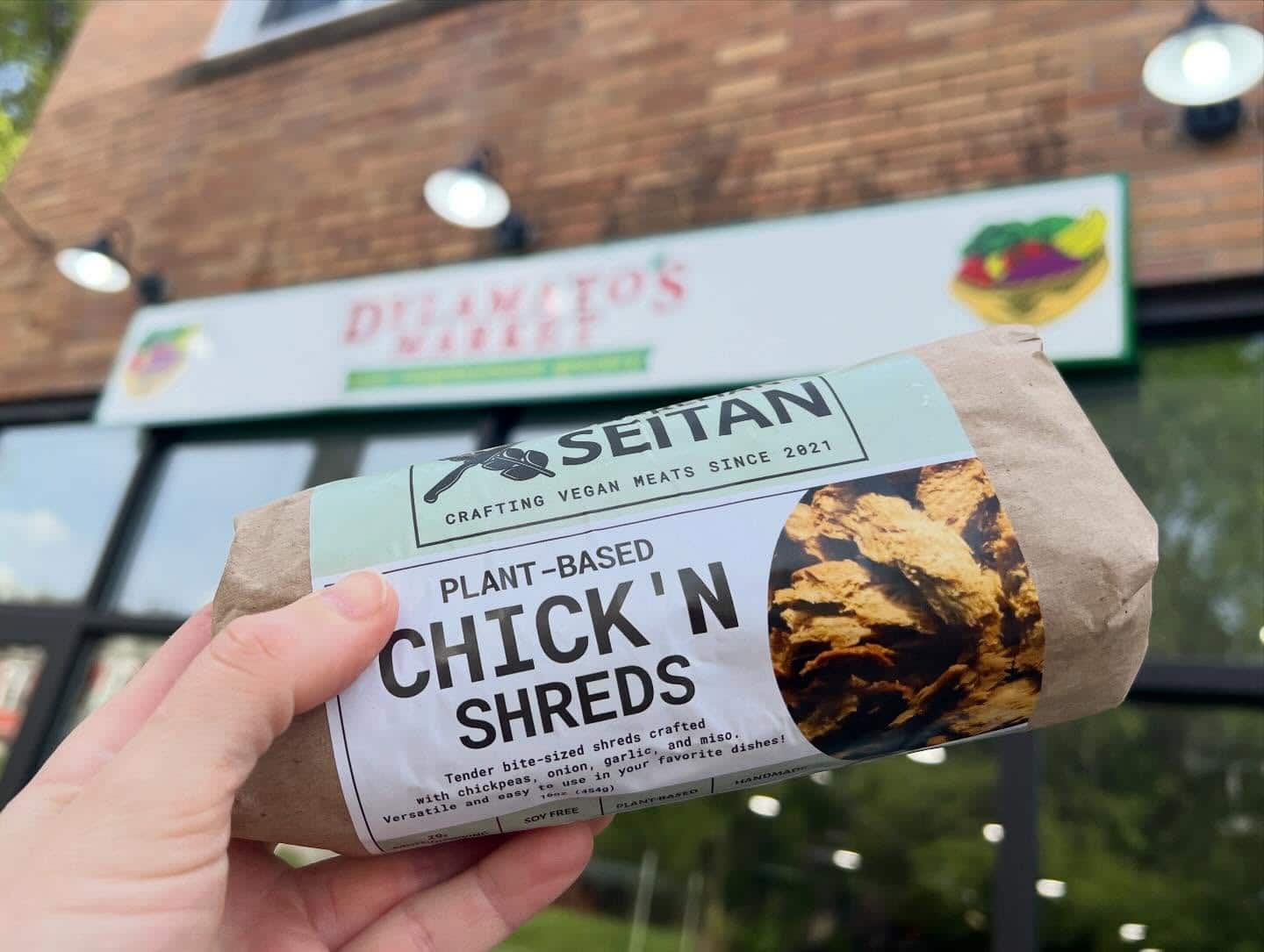
Chick’n shreds
From there, you can you cook it. You can can steam it, bake it or smoke it. Most of mine are baked and steamed. After it’s cooked, then you can slice it or shred it.
What are your most popular products?
Great question. My most popular products right now are the chick’n and the bac’n. I have been told that there’s just not a good bacon alternative on the market, so that’s definitely a crowd favorite as far as flavor. The chick’n is popular because it’s really great to cook with. It’s the most mildly seasoned, with onion, garlic and miso, so it’ll take on the whatever sauce or other seasonings you add to it without having a very strong flavor itself. But it’s also seasoned and cooked so you can just eat it on its own or on a salad.

Seitan bac’n
How much protein is in a serving?
With our chick’n, a serving is a quarter pound, which is a generous serving, and there are 28 grams of protein per serving. Most of our varieties also have beans in that, so that adds some fiber and a little more protein as well. We use chickpeas, black beans and white beans.
You have a lot of recipes on your website. What do you and your customers really like to make?
I feel like the most popular thing that I’ve heard from customers is a stir fry. It’s like an umbrella, a quick and easy meal that you can customize. You can make a stir fry with a lot of our products like chick’n, beef, steak… There’s a lot of variety there.
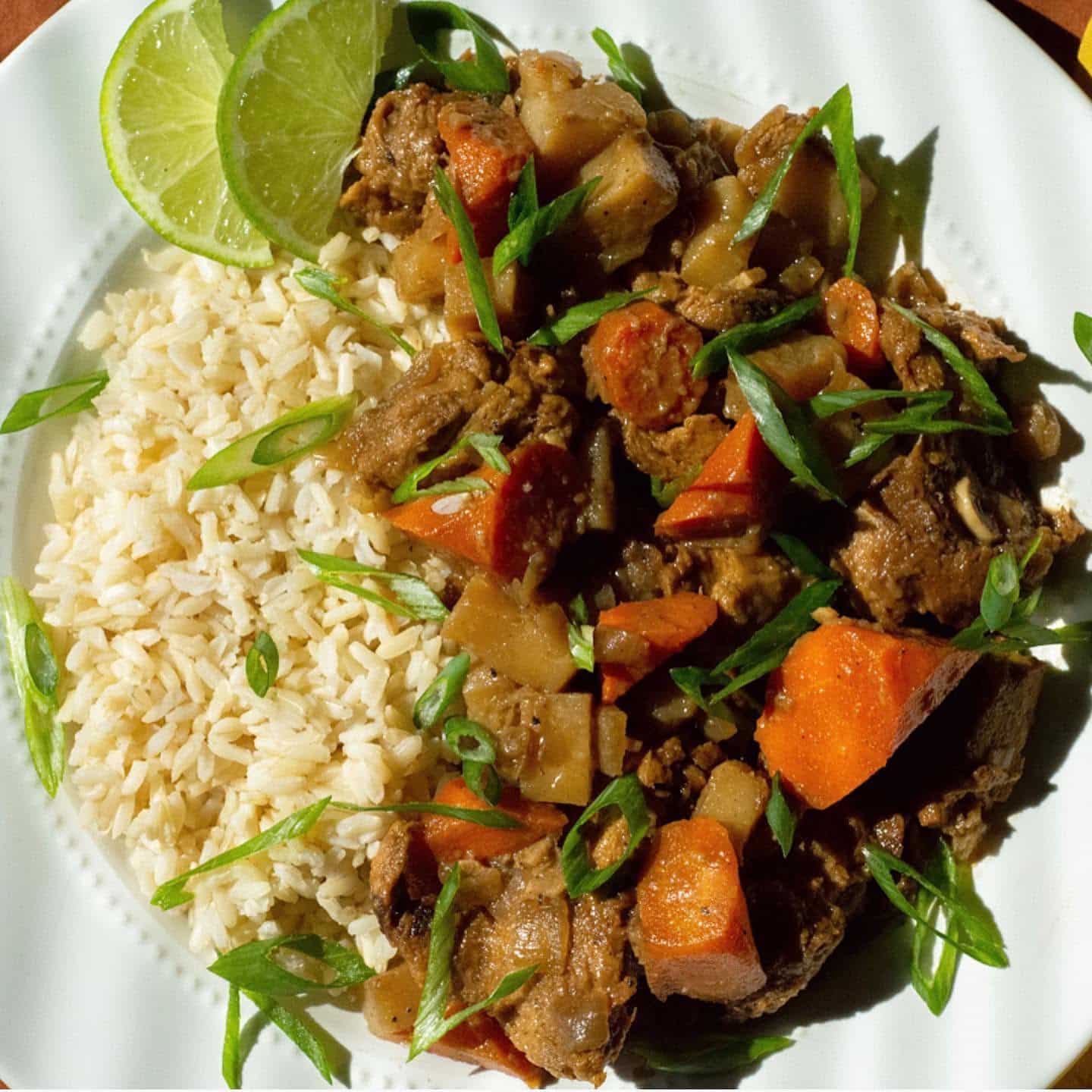
Veganized chicken adobo
I don’t really have a go-to. I’m the kind of cook who can’t eat the same thing very often. I like trying new recipes. What I like to do – and encourage others to do – is to veganize my favorite recipes. That is why I fell in love with seitan and it helped me to go plant-based. I am vegan, myself, which is not necessarily the end goal for everyone. But when I first moved to Pittsburgh and was trying to eat more plant-based, I was missing my comfort meals. I think that’s the case for a lot of people and it can be a barrier to eating plant-based. Your cultural foods and your sentimental foods aren’t things you can just cut out. So I really enjoyed veganizing my favorite recipes, my comfort meals and meals from my childhood. I encourage people to veganize their favorite or new recipes by swapping out ingredients.
Is there anything else you’d like to mention?
There are a few places to find us. We started selling at retail locations including a food co-op here in Pittsburgh and other neighborhood markets. Check out our retail partners page for where to find us!
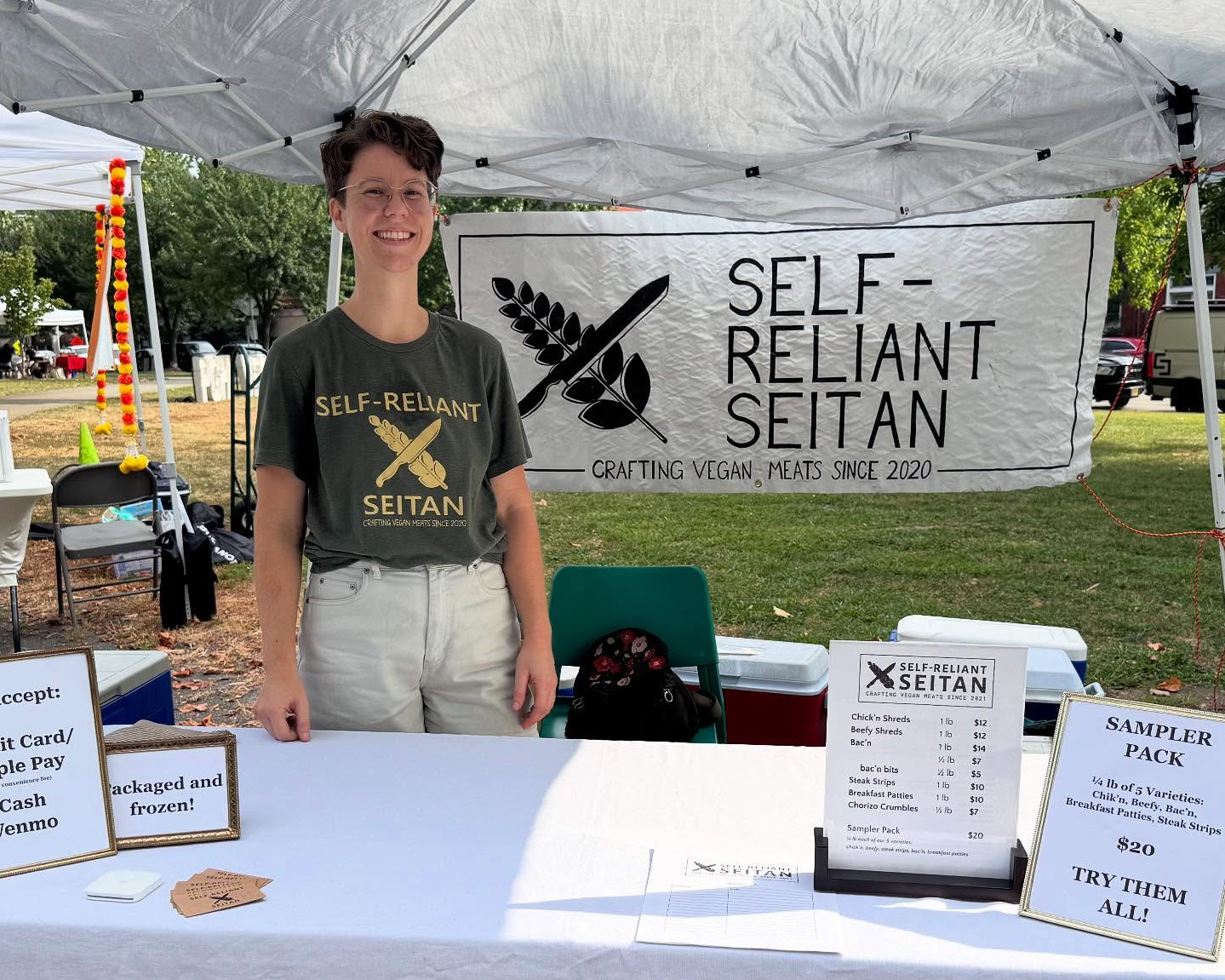
Foster at VegFest
Head to Self-Reliant Seitan’s website to learn more about its products, view the market and event schedule and find retail and cafe partners near you. You can stay in touch with Self-Reliant Seitan via Facebook and Instagram.
- Photos : Self-Reliant Seitan