As the fruit buds and sprouts of vegetables begin to appear, another PA Preferred® crop is growing right along with them. Cut flowers are an emerging specialty crop and agritourism sector enhancing the farm-to-table experience with vibrant and often edible blooms available through the growing season and beyond.
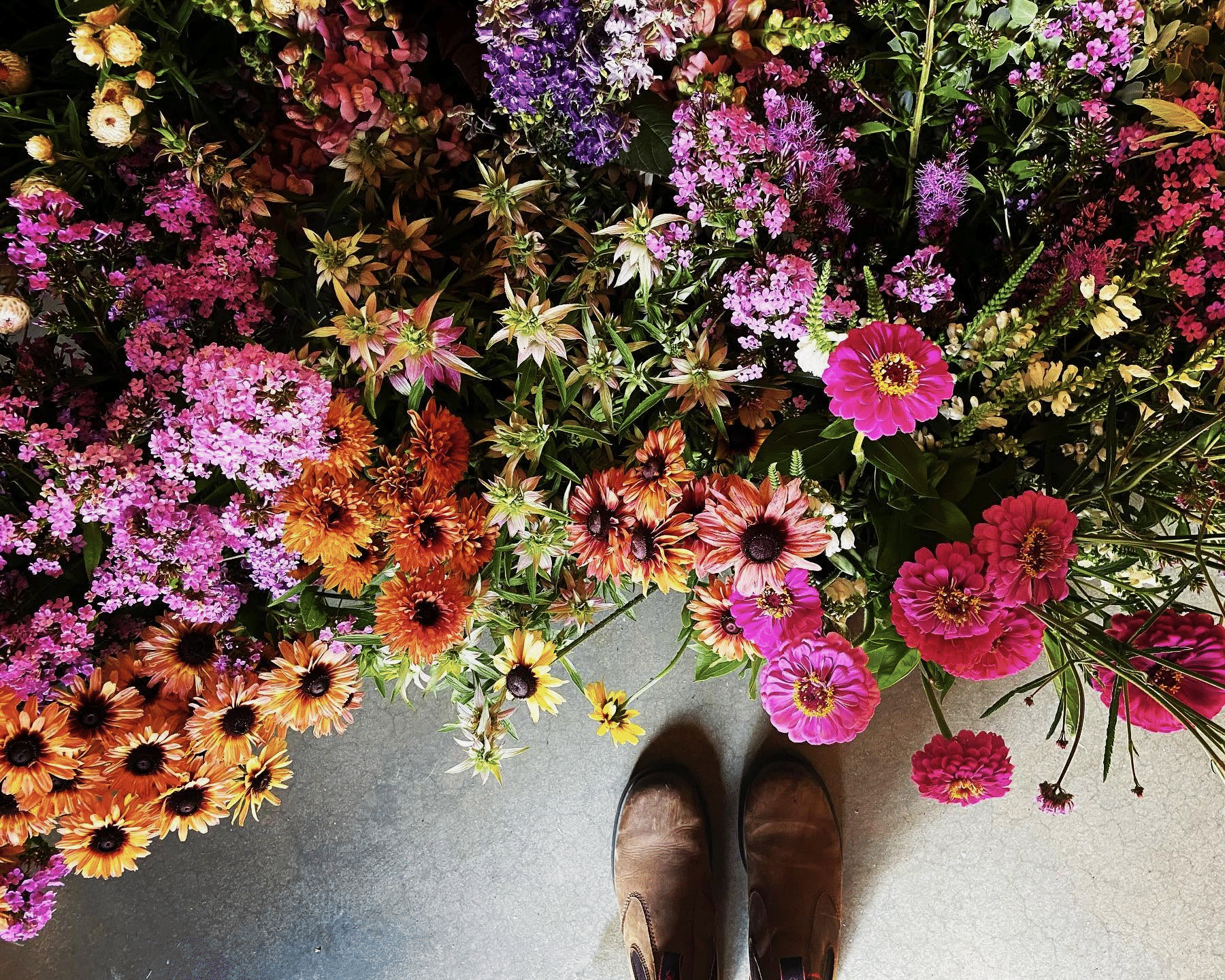
Cut flowers at Wildflower Farm in Malvern, PA
Farmers have traditionally offered cut flowers as a value-added product, along with other fresh produce. Today, a growing number of farmers focus exclusively on cut flowers to meet an increasing demand for these mood-brightening, space-enhancing crops. We spoke with PA Preferred® members Austin and Kaitlyn Heacock of Homegrown by Heroes’ Half Timbered Acres flower farm in Lawrence County, Liesa Leader of Lavender Brook Farm in Dauphin County and Theresa Skokowski of By the Bloom Farm & Flower Co. in Northumberland County about the floriculture blooming in Pennsylvania.
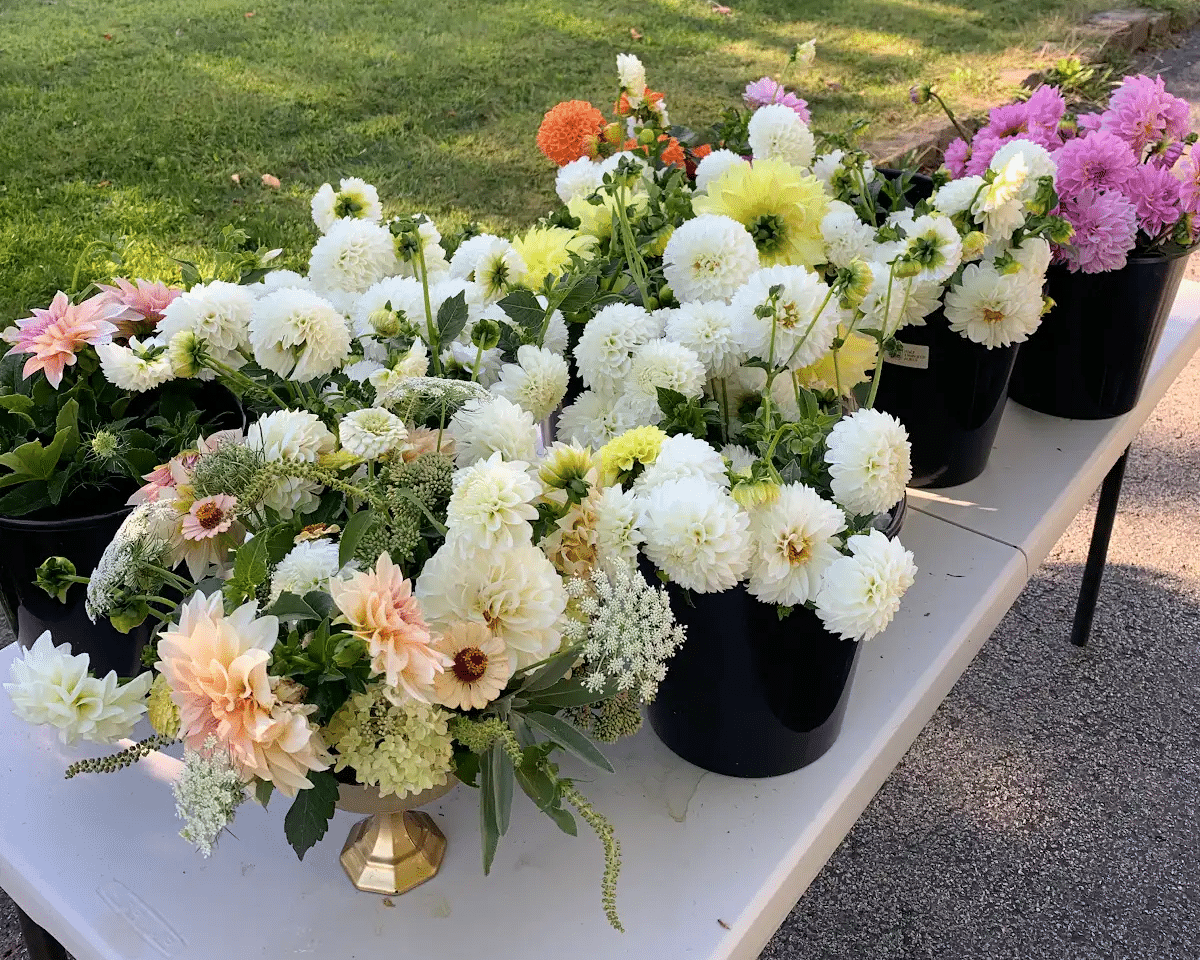
Cut flowers at Half Timbered Acres in New Castle, PA
Liesa Leader found her way into flower farming by kismet more than intention. She and her husband wanted to farm in some capacity, and they visited their current property while it was in full bloom with five acres of lavender. Leader embraced it. “It was really love at first sight,” she recalls. “What started out as a nice place to call home became this fun, third-chapter hobby business. I’m loving it,” she says. Leader offers fresh and dried lavender and a wide variety of kitchen, bath and body products in her online shop and at regional markets.
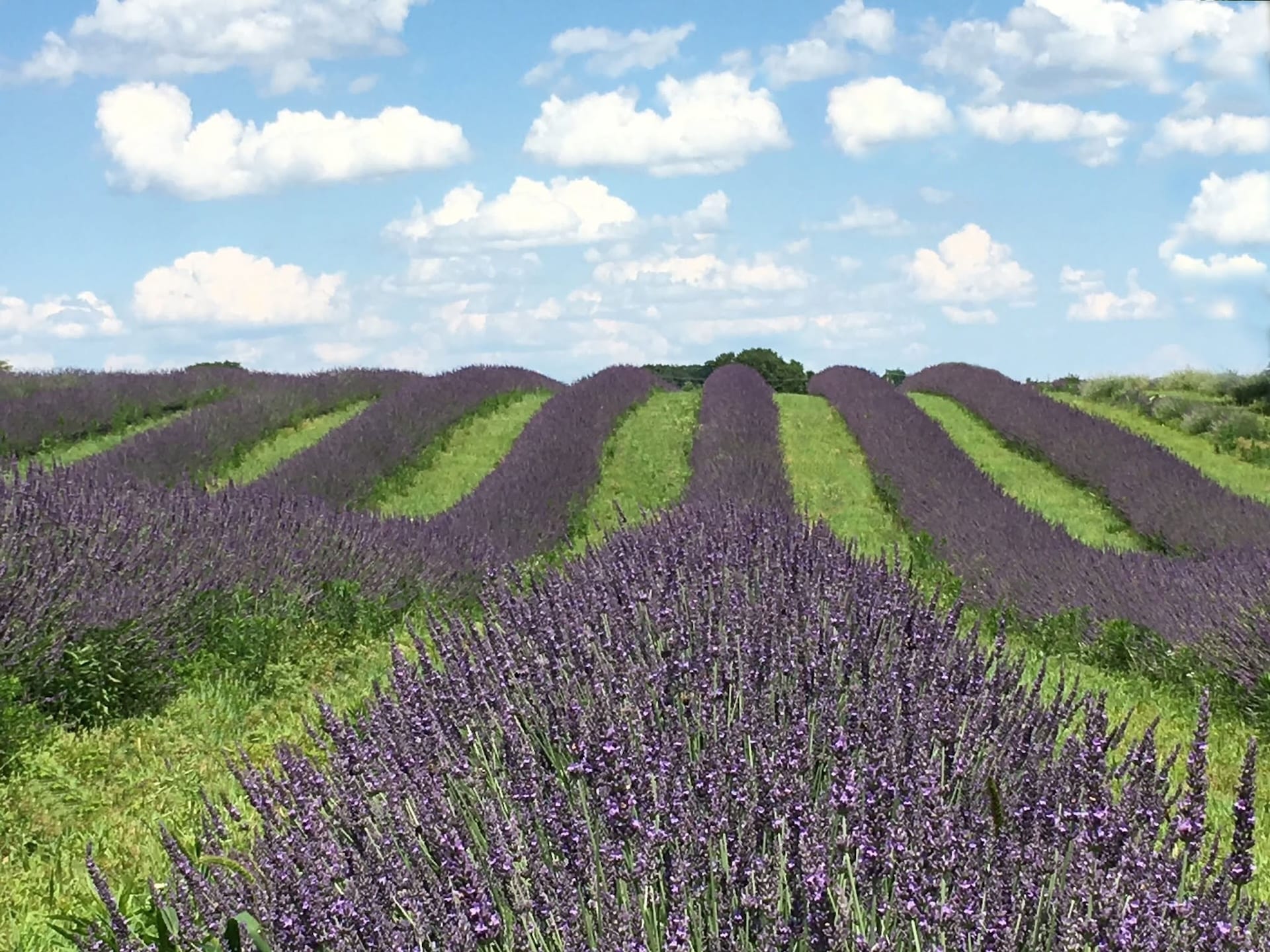
Lavender Brook Farm in Hummelstown, PA
Army veteran Theresa Skokowski grew up around flowers and farming because her parents ran a nursery in Chester County. While stationed in Boston, she and her family started a small hobby farm, which served as the impetus for By the Bloom Farm & Flower Co., a full-scale flower farm, design studio and event space here in her home state.
Also a military family, the Heacocks have lived all over the world. Austin and Kaitlyn’s work as flower farmers was inspired by time spent in Europe, where they ate freshly farmed food and noticed the great care and attention that farmers and citizens poured into their gardens and farmland. Drawing on Austin’s time growing up and working on farms in Lancaster County, and Kaitlyn’s interest in homesteading, they began growing commercial flowers in Pennsylvania a couple of years ago.
As the cut flower industry continues to grow, these farmers evolve with it, expanding their product offerings and learning the complex, interdisciplinary science of floriculture by getting their hands dirty.
The Pennsylvania Flower Industry
Flowers are farmed across the Commonwealth, coloring the landscape with pinks, violets, crimsons, oranges, yellows and golds from spring into autumn. Pennsylvania is home to roughly 800 flower growers and ranks in the top five states for commercial floriculture, making it a true botanical powerhouse.
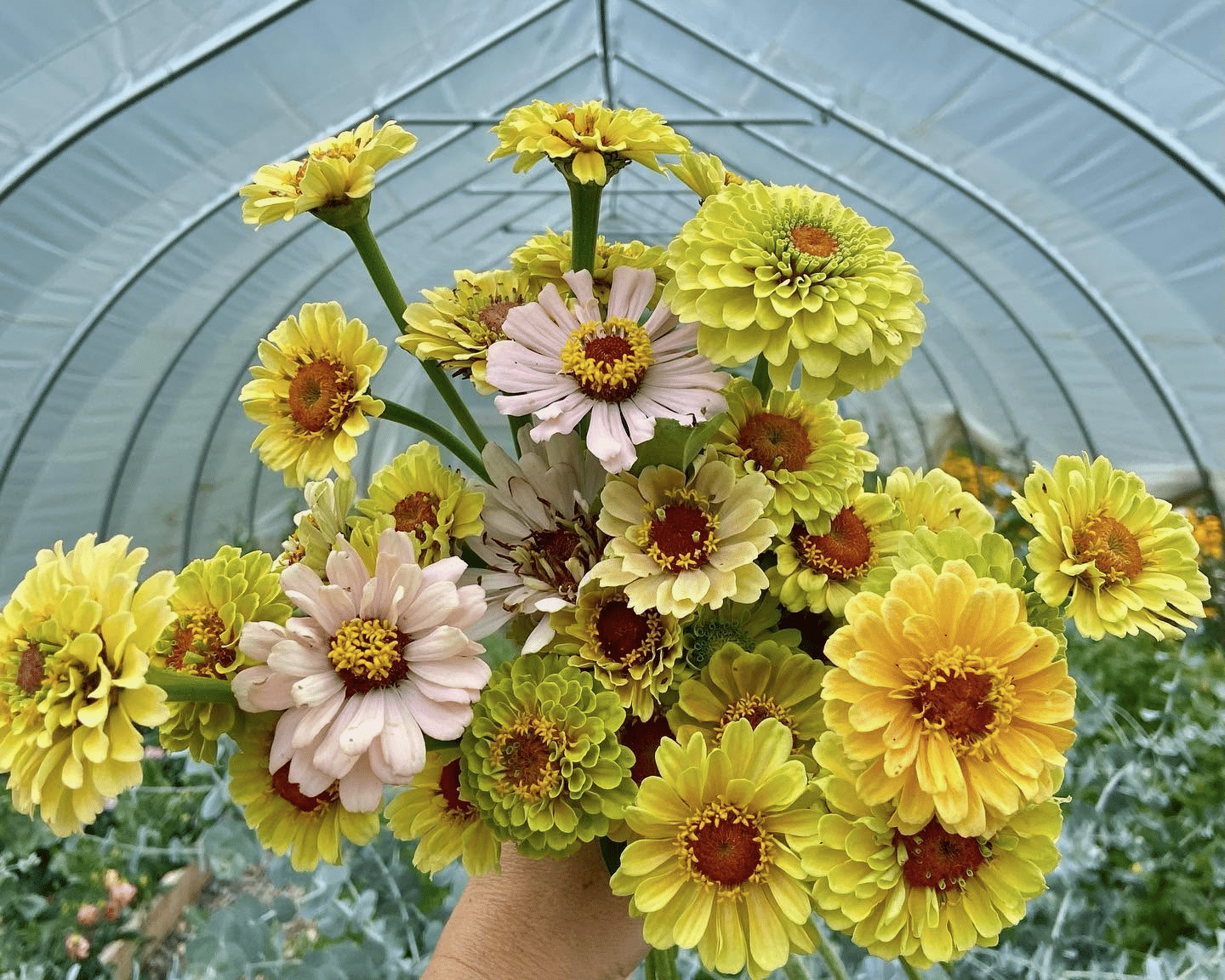
Zinnias at Wildflower Farm in Malvern, PA
The Pennsylvania growing season kicks off in the spring with delicate anemones, ranunculus, and narcissus, followed by snapdragons, tulips and peonies. Lavender fields erupt in purple from May through July, at which point a rainbow of zinnias start popping up. Lisianthus offer a first flush mid-summer, before sunflowers and dahlias steal the show. These sunset-hued stars bloom from late summer and into the fall. During the winter, flower farmers may focus on indoor winter blooms, like poinsettia, dried flower arrangements and wreaths, starting the next season’s seedlings and catching up on the myriad logistics and operations to keep businesses thriving.
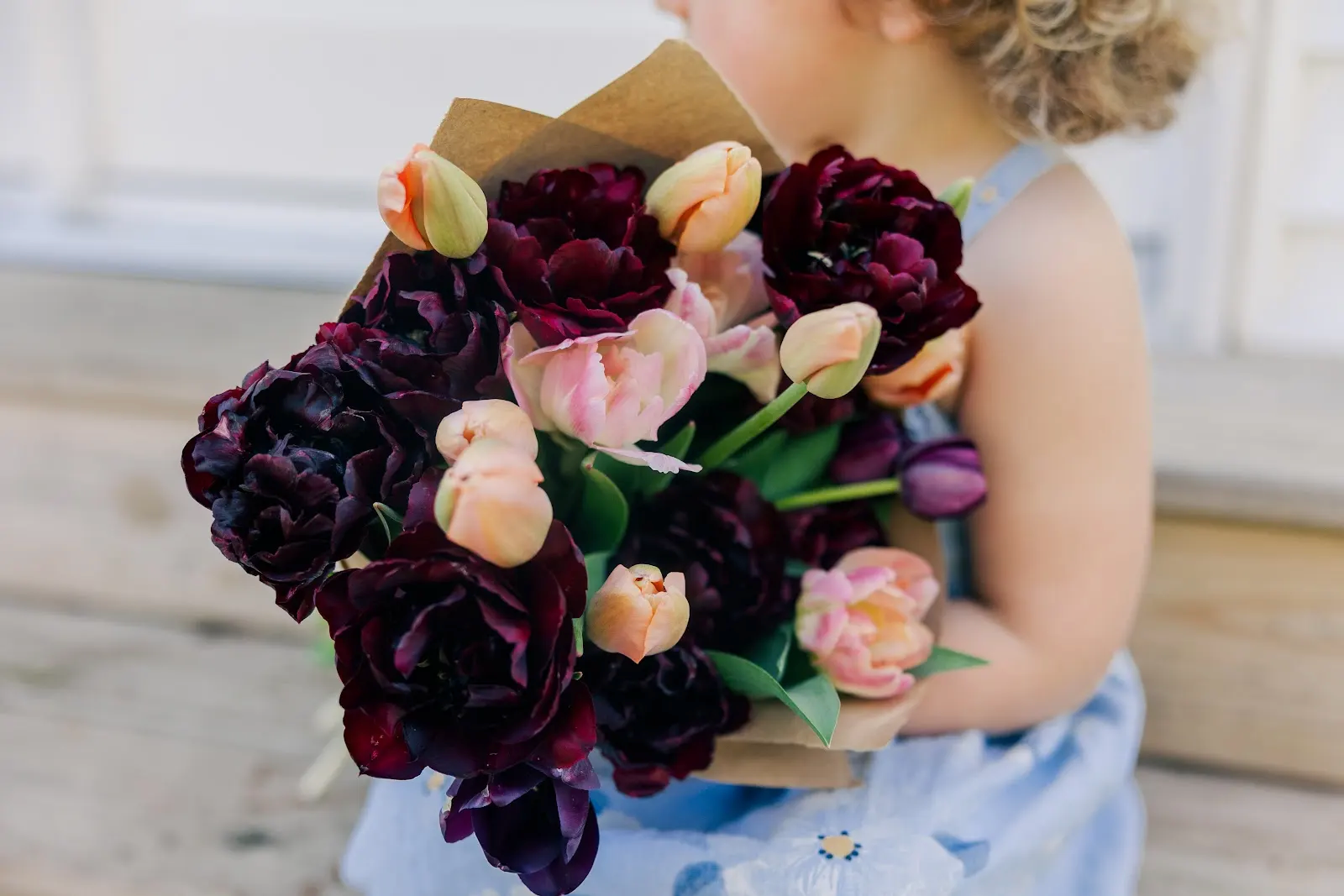
Cut tulips at Half Timbered Acres
Flowers are often sold direct to consumers through a number of channels, such as community supported agriculture programs (CSAs), farm stands, farmers markets and grocery co-ops. CSAs and subscriptions allow customers to enjoy an ongoing rotation of delightful floral arrangements while investing in local agriculture. Traditional and floral farms, alike offer floral subscriptions, including By the Bloom Farm & Flower Co., Long Lane Farm Flowers in Lycoming County, Maggie’s Farm Gettysburg in Adams County and Twining Seasons Farm in Susquehanna County.
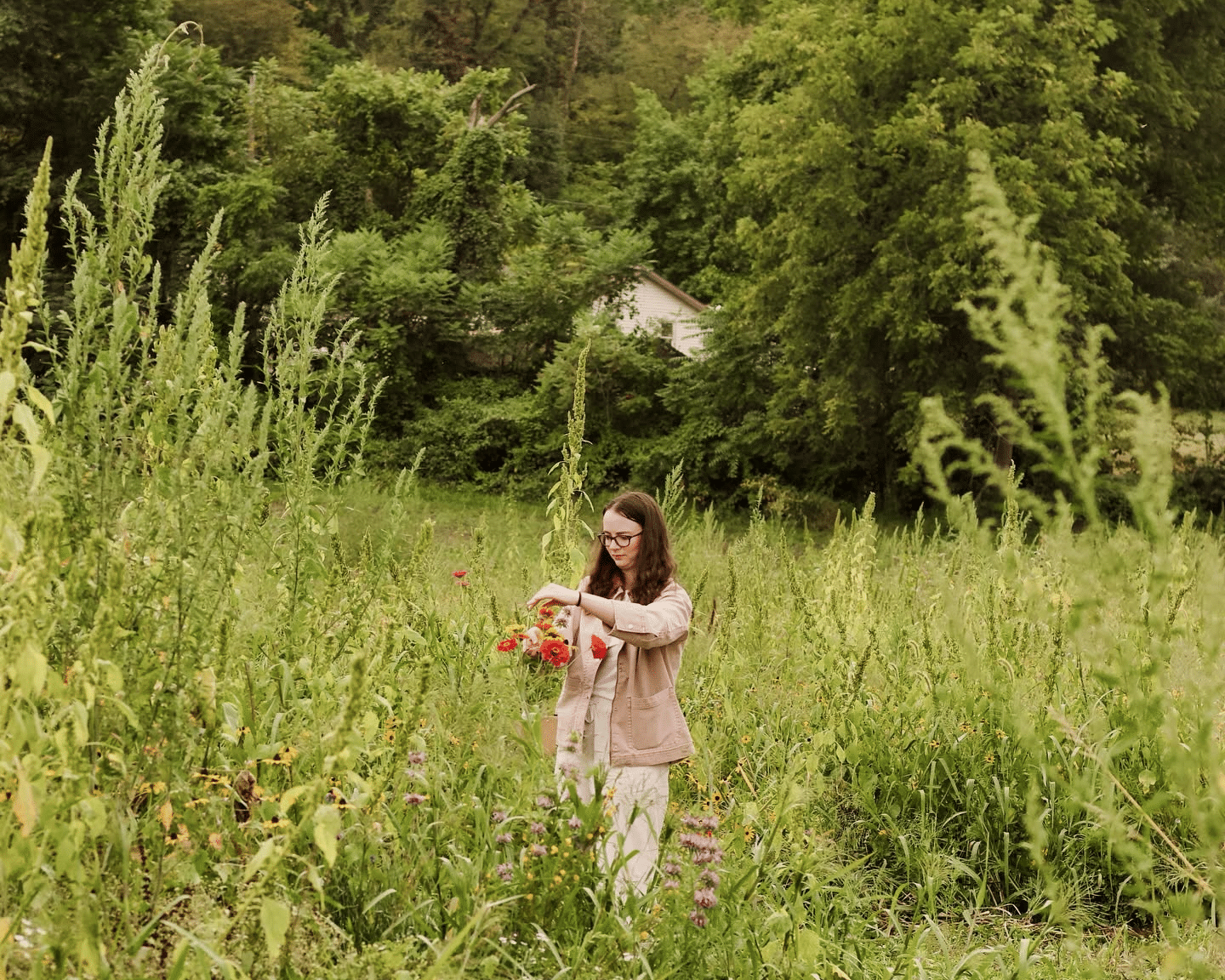
Wildflower gathering at By the Bloom Farm & Flower Co.
Agritourism is a growing outlet for commercial flower farms, allowing the community to enjoy the floral splendor through immersive pick-your-own events, farm tours, farm stays, picnics, classes and workshops. Flower lovers can wander the lavender fields of Hope Hill Lavender Farm in Schuylkill County, attend a spring retreat at Wildflower Farm in Chester County, and meander the sunflower and wildflower fields (and even stay overnight!) at Maple Bottom Farm in Fayette County. By the Bloom Farm & Flower Co. hosts numerous events, like U-pick lavender, sunflower and dahlia days, Blooms & Bites floral arrangement and artisan food evenings, special picnics and Garden-to-Glass mixology workshops. Skokowski is in the process of renovating her historic property for even more types of events in the future.
Edible Flowers, Herbs and Floral Products
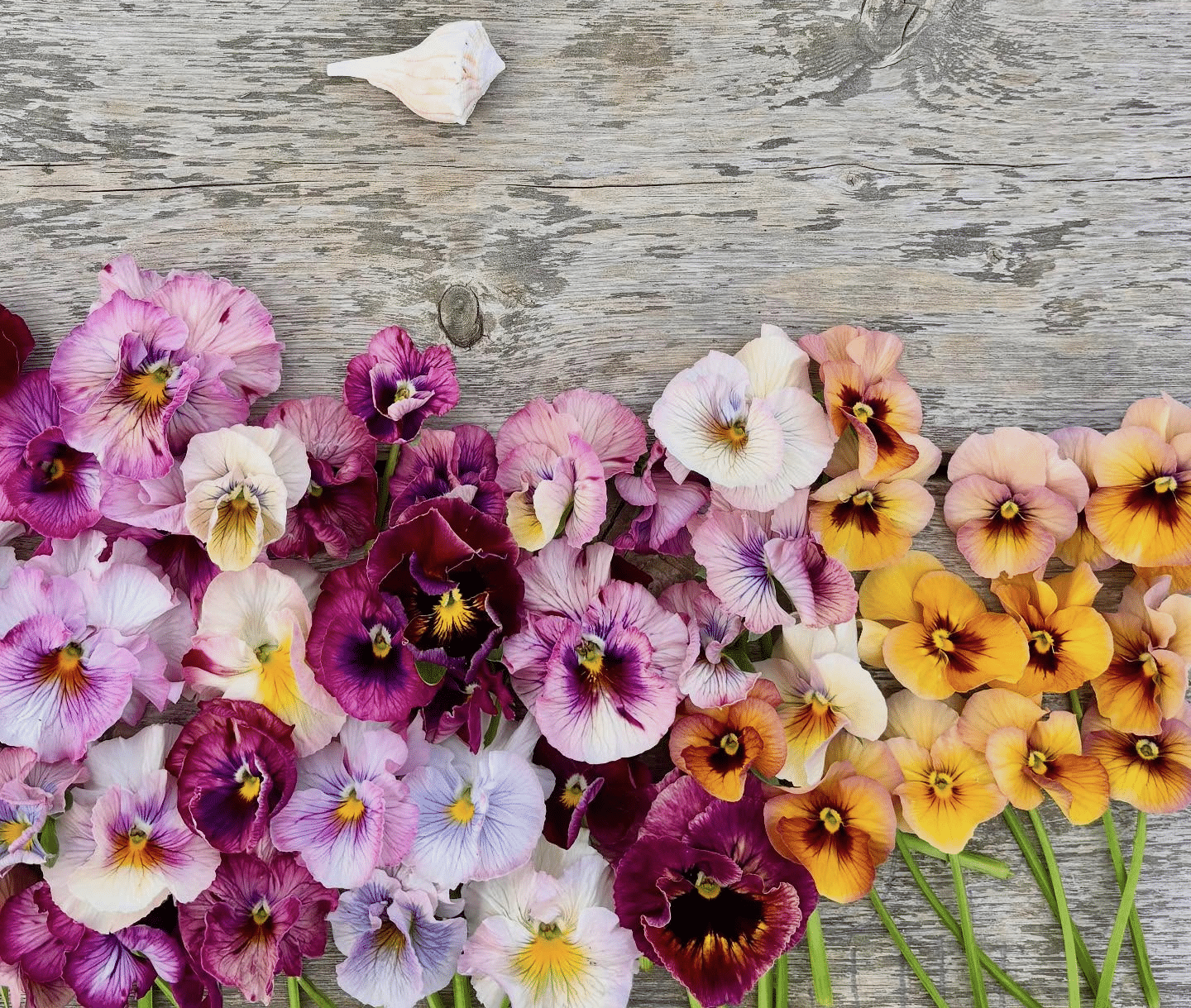
Edible pansies grown at Wildflower Farm
Beyond their beauty and alluring scents, flowers have culinary and home uses that many farmers, producers and consumers tap into. Edible flowers are both pretty and powerful, adding aesthetic appeal and loads of antioxidants and essential minerals to your plate. Skokowski says, “We grow edible flowers including nasturtiums, calendula, bachelor’s buttons, borage, violas and pansies that are wonderful for garnishes, cocktails, salads, and desserts.” Hydroponic grower GetBlok Farms in Beaver County offers dainty delft blue nigella and peppery jewel mix nasturtium, and Wildflower Farm grows a stunning array of minty, crunchy specialty pansies. Marigold and cornflower petals are also edible and add gorgeous hues of orange, gold and blue to any dish.
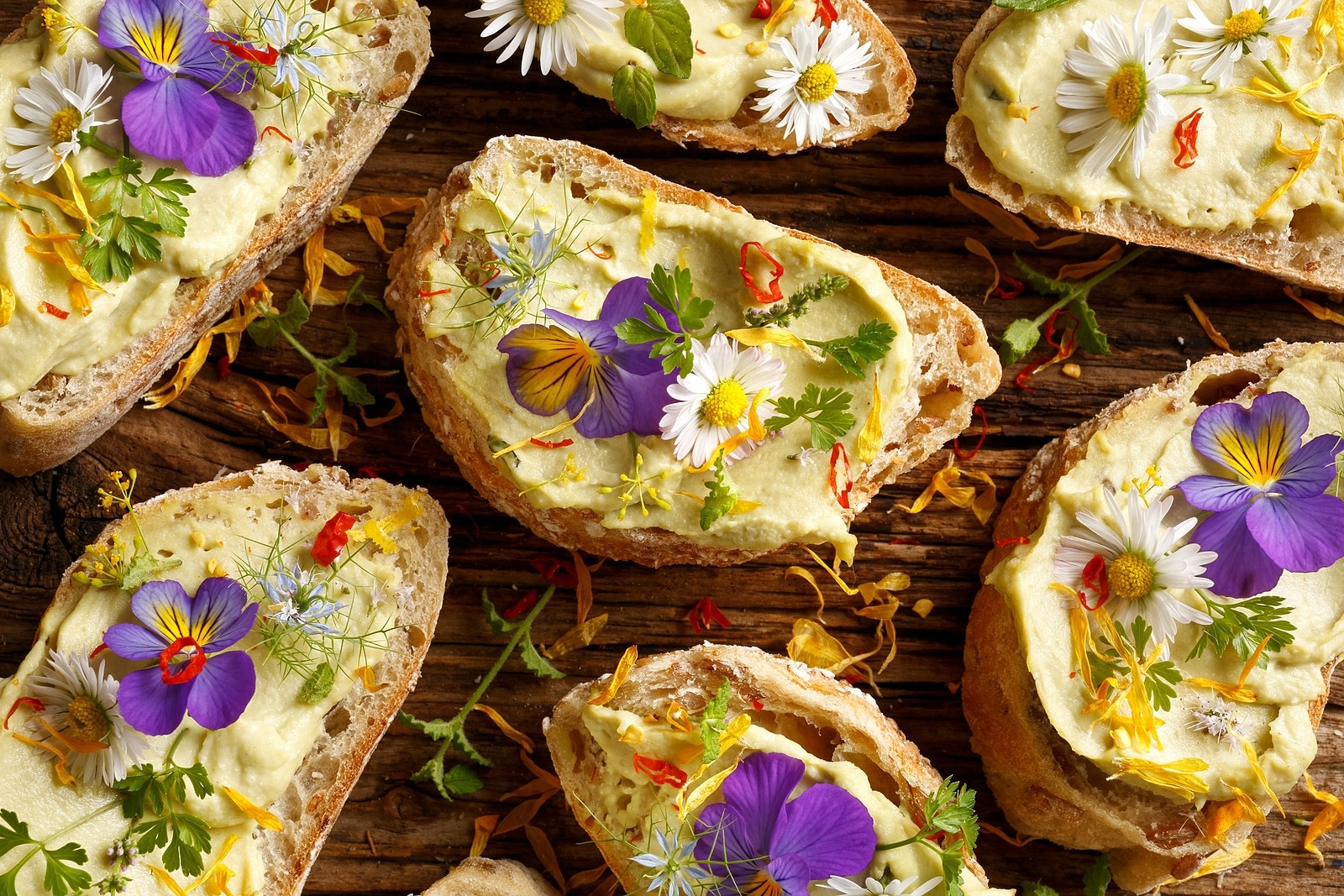
Flowering herbs also offer benefits beyond beauty, with medicinal properties and wellness uses. Katydid Hill Farm in Berks County grows fields of calendula, chamomile, lavender and cornflower, harvested in peak bloom for handcrafted teas and apothecary products, such as Sunshine Tea made with organic calendula flowers, lemon verbena and lemon balm, and Stardust Tea made with organic lavender, chamomile, bachelor buttons, lemon verbena and milky oats.
Skokowski grows and offers fresh herb bouquets for culinary use. “They vary seasonally, but commonly include combinations of basil, rosemary, thyme, oregano, sage, parsley, dill, mint, lemon balm, lavender, chives and flowering herbs, such as flowering basil, dill, fennel and chive blossoms,” she says. These bouquets are a hit with home cooks, local restaurants and food enthusiasts.
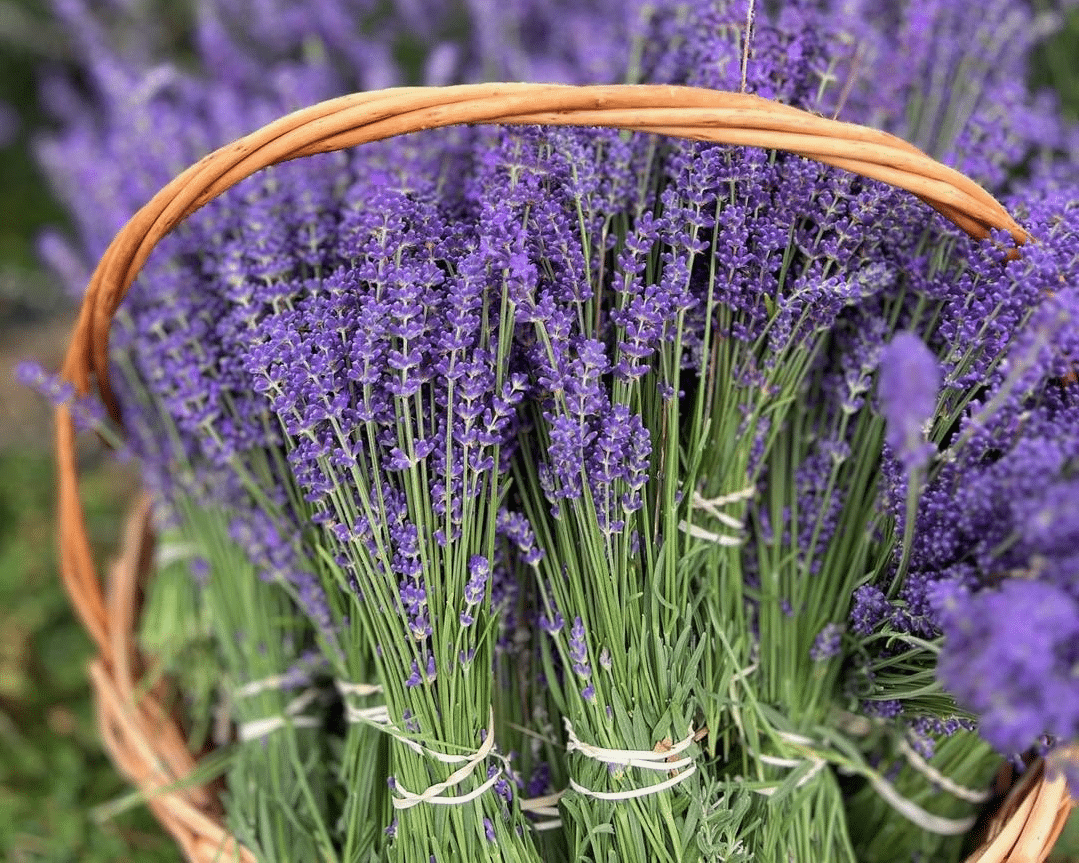
Folgate culinary lavender at Lavender Brook Farm
Culinary lavender, offered by many growers, adds a gentle, floral touch to baked goods and other dishes. The Heacocks grow culinary lavender in addition to herbs, like calendula and chamomile. Austin recalls his first time trying lavender in food. “In France, on the edge of the Alps, we stayed in an AirBnB. For breakfast one morning, the host had lavender, coarse sea salt and scrambled eggs that he made, along with fresh bread. At first, I asked, ‘Why is there lavender in my food? Do I pick it off?’ He said, ‘No, you can eat it!’ I took him at his word, and I don’t know that I’ve had scrambled eggs that good since.”
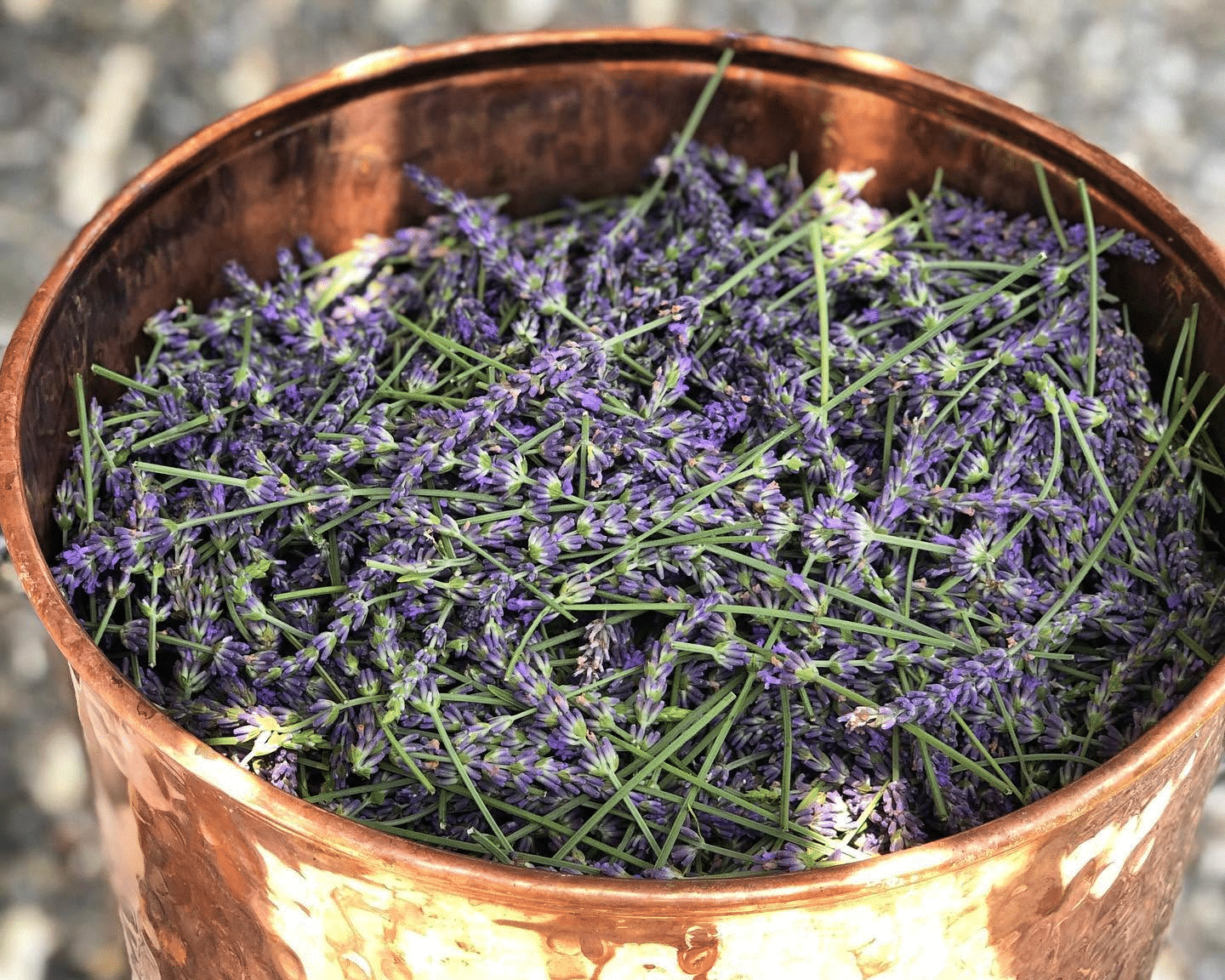
Distilling at Lavender Brook Farm
Lavender is also recognized for its calming, therapeutic aroma, captured in lotions, balms, salves and more. Many lavender farmers offer a suite of luxurious, handcrafted products for the kitchen, home and spa. At Lavender Brook Farm, Leader’s most popular lavender items are an all-natural lotion stick she makes from scratch with a natural cocoa butter and an essential oil roll-on made with oil she distills herself.
Flowers don’t need to be edible to be part of a dining experience. Like many other flower farmers, Skokowski grows using a sustainable, closed-loop system focused on soil health, biodiversity, composting, pollinator support and natural growing practices that avoid harsh chemicals. “This allows many of our flowers to be safely incorporated into culinary presentations,” she says. “Even our larger blooms, like dahlias, are frequently used by chefs, bakers and event designers for cakes, grazing tables, cocktails and tablescapes. While not all flowers are edible, many can serve as stunning natural décor elements that bring the beauty of the garden directly to the table.”
Arranging Cut Flowers
Many flower farms offer buckets of blooms for you to build your own arrangements, whether for home decor, special events or a group activity. Roots Cut Flower Farm in Cumberland County offers 3-gallon party buckets full of fresh cuts, Hidden Acres Flower Farm in Northampton County offers DIY buckets of its stunning dahlias, and Wildflower Farm creates designer buckets with custom color palettes and pairings that can build up to three centerpieces or a dozen bud vases.
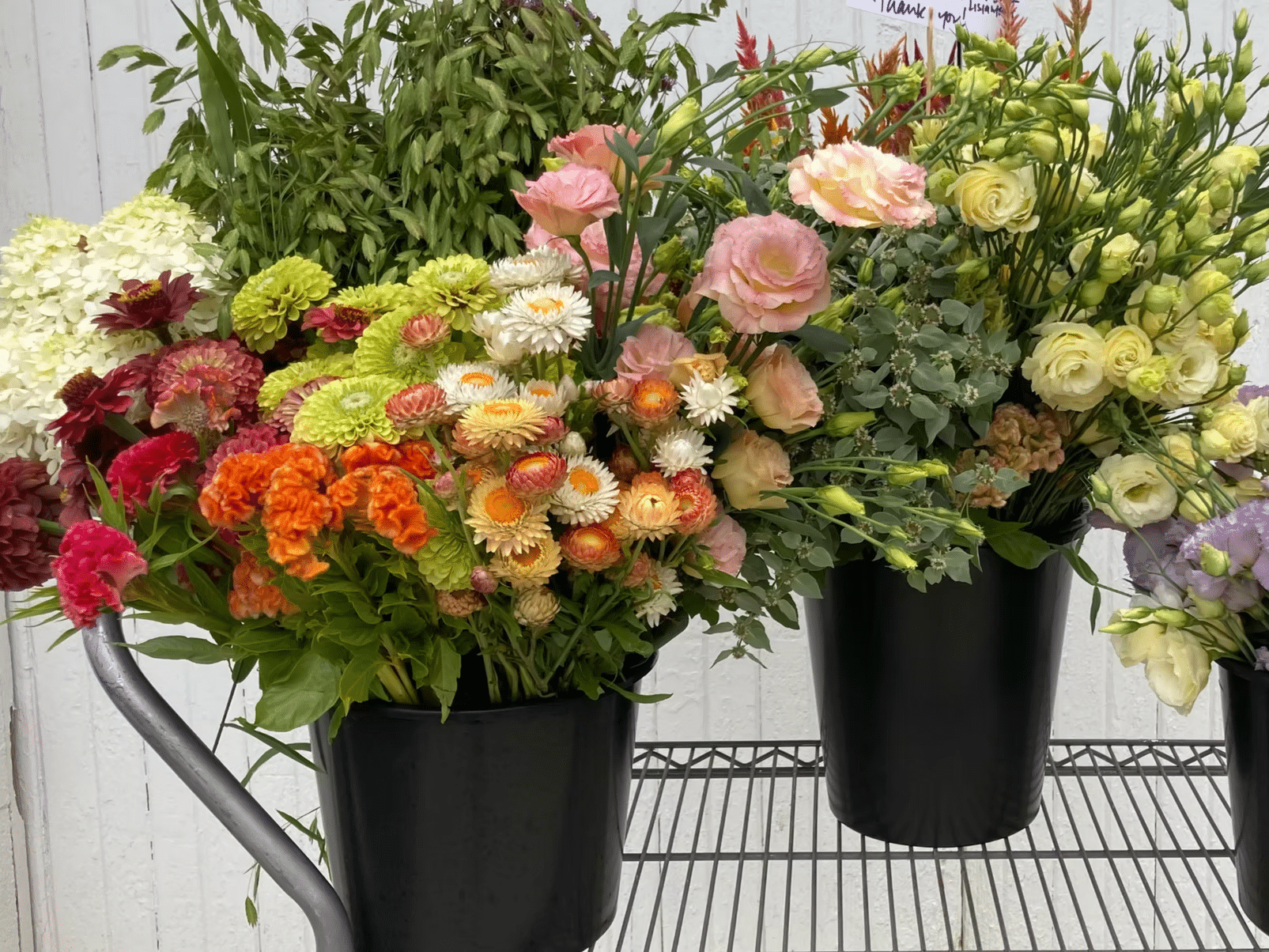
Party Buckets by Roots Cut Flower Farm
If you’d like to try building a bouquet or arrangement at home, there are a few tips and tricks for achieving a lovely end product. The first step is removing thorns, leaves and shoots from the stems. Cut the stems at 45-degree angles for optimal hydration and longevity. Then, select one to three focal blooms — either large blossoms or your favorites — and build your arrangement around those. For a bouquet, twirl the flowers in your hand while adding one at a time to ensure even distribution. For a vase, you can create a grid with floral tape to space out the flowers. Add greenery, like ferns and herbs, for structure and interest. Delicate flowers and grasses can offer a finishing touch to your creation.
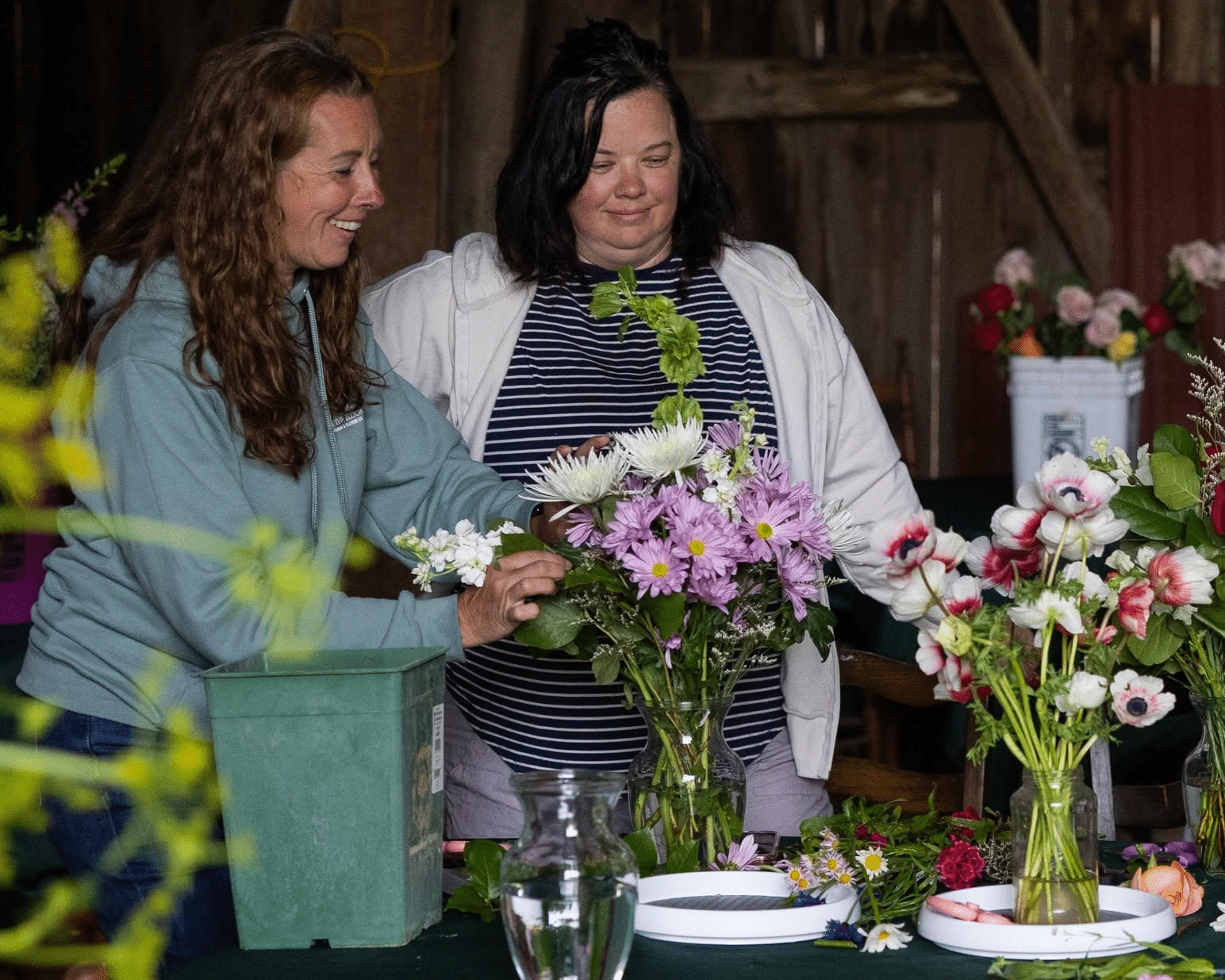
Flower arranging class at By the Bloom Farm & Flower Co. in Milton, PA
Many follow the 3-5-8 rule for floral design, which helps achieve a balanced, harmonious look. With this approach, use three focal flowers, like peonies, sunflowers and dahlias, plus five textural flowers to add shape, such as irises, tulips, daisies and lisianthus, and eight filler flowers and greenery for volume and lushness, such as ferns, limonium and baby’s breath.
Of course, there’s no need to follow any rules. Pennsylvania blooms look stunning, no matter how you might arrange them!
Looking Ahead
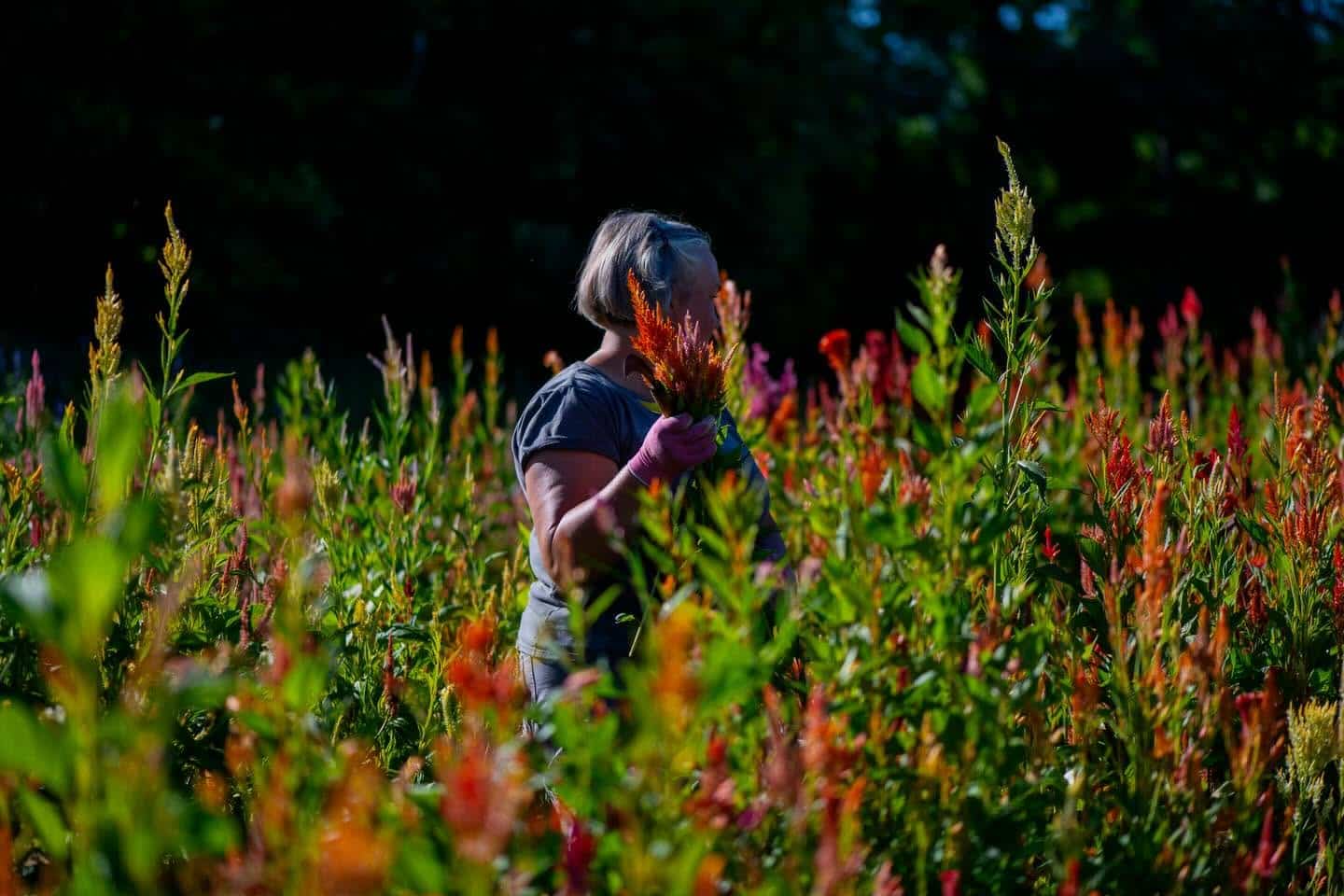
Roots Cut Flower Farm
Leader expects to stay busy as her lavender farm continues to grow and evolve. “I make product year-round,” she says. “I make everything in small batches because that ensures that I’m using fresh product and my ingredients have a good best-by date.” She’s found her groove in the seasonal to-dos and lets the flowers tell her what’s needed, whether it’s weeding, watering or “haircuts” for optimal pruned health.
The Heacocks, too, continue growing. They’ve planted a miniature orchard of apple and peach trees as well as a substantial pumpkin patch, and they tend to about 30 laying hens, in addition to their expanding floral business. Kaitlyn says, “We’re trying to bring a European flair to western Pennsylvania. There is an appreciation for the beauty of product, beauty in where it’s grown, and appreciation for manual work put in by the individual or family creating something that makes people hungry for old beauty. We all crave that sometimes. So, whether we just continue with flower sales, or open more up in the future, we’re blessed to be able to start on that journey.”
Sokokowski’s farm continues to flourish with fields of blooms and immersive floral events. As she steadily renovates and transforms the historic property into a floral destination, she carries great excitement and optimism for what’s to come. “The future of floriculture in Pennsylvania is incredibly bright,” she says. “More consumers are seeking sustainable, locally grown alternatives to imported flowers, and that growing awareness is creating new opportunities for flower farmers, designers and agritourism businesses across the Commonwealth.”
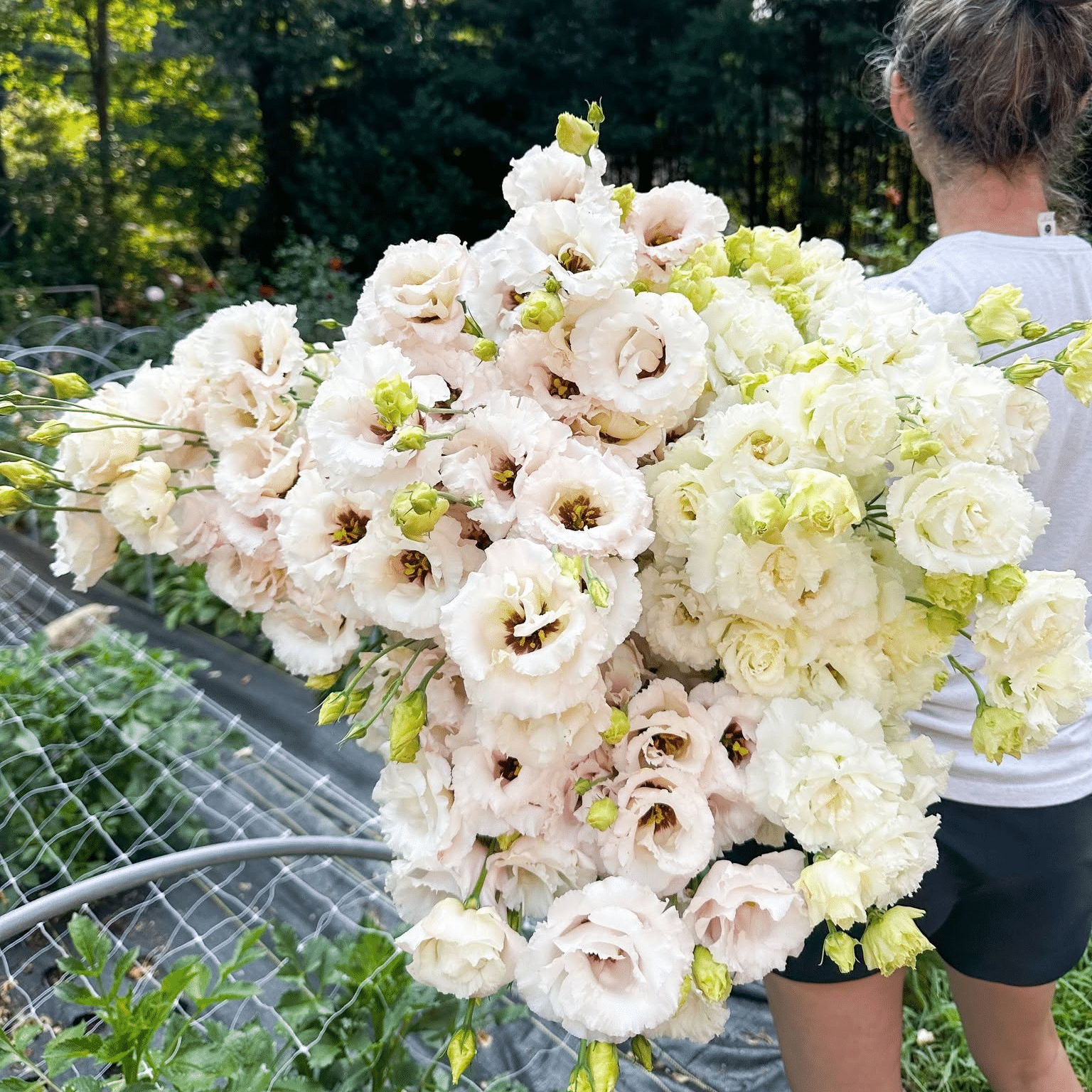
Lisianthus harvest at By the Bloom Farm & Flower Co.
Find a flower farm near you with the PA Preferred® search tool on PAPreferred.com and enjoy the spectacular blooms and blossoms of Pennsylvania floriculture.
This series was created in collaboration with PA Preferred.

PA Preferred® is Pennsylvania’s statewide branding program that promotes locally grown and processed food and other agricultural products.
- Feature photo: Wildflower Farm
- Roots Cut Flower Farm photos: Heather Shelley of Dreaming Tree Studios for Roots Cut Flower Farm
- Canapes photo: Bigstock
- All other ophotos: Courtesy of the respective businesses