Throughout my life, I’ve never had much taste for science. Until, that is, I learned science encompasses two of my favorite things: beer and cheese. Recently, there was no better opportunity to learn about this delicious chemistry than on Wednesday, April 27 with All Things Fermented, a collaboration between City Food Tours and Triumph Brewing Co. for Philadelphia Science Festival.
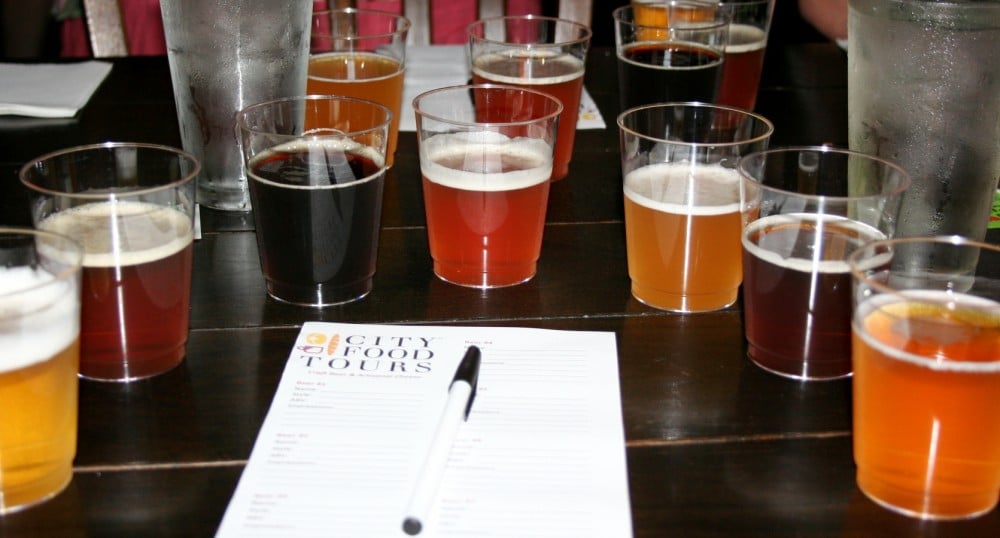
The event took place in one of the large upper-level rooms at Triumph, with participants seated at three long family-style tables. Everyone was greeted with a sampling of seven beers from Triumph, lined up in a small rainbow at their setting. Soon thereafter, Robert Weinberg and Eric Matzke, founders of City Food Tours, took over to drop some tasty knowledge on all in attendance.
Eric led the charge with beer, explaining everything about the process from malting barley to choosing and adding yeast. He also threw in some handy tidbits of trivia: Did you know yeast was one of the first organisms to be domesticated by people? Or do you know the difference between a Trappiste ale and an Abbey ale? (A Trappiste ale is actually made by a monk; an Abbey ale is made by any commercial brewer who has moved into a defunct monastery.)
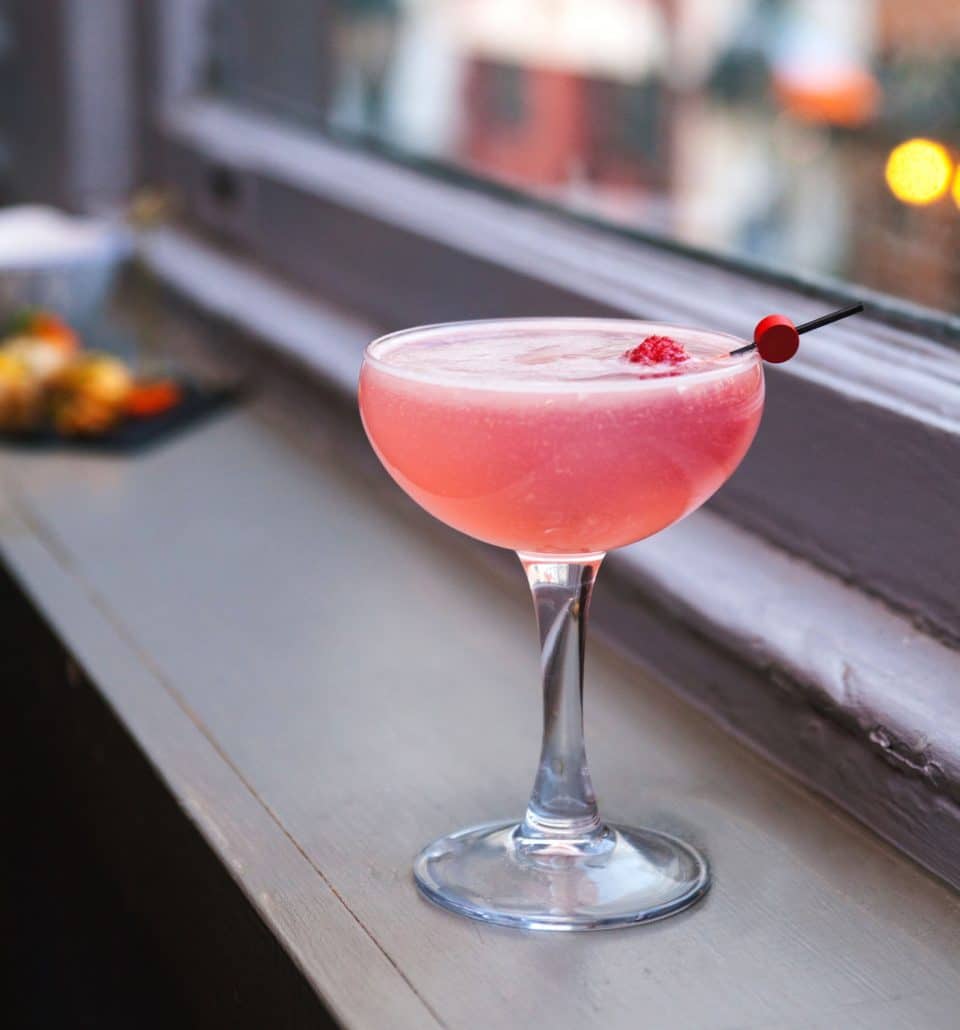
As Eric explained the process, he also touched on what makes certain styles and colors, using the beer in front of us as examples. Triumph gave us seven samples to work with: their Kinder Pilsner, Amber Ale, Belgian Dubbel RyePA, Bengal Gold IPA, Hefeweizen, Munich Dunkel, and Belgian Golden. The last of the bunch was easily the best to drink, but the best part of the event was learning the science behind all of them.
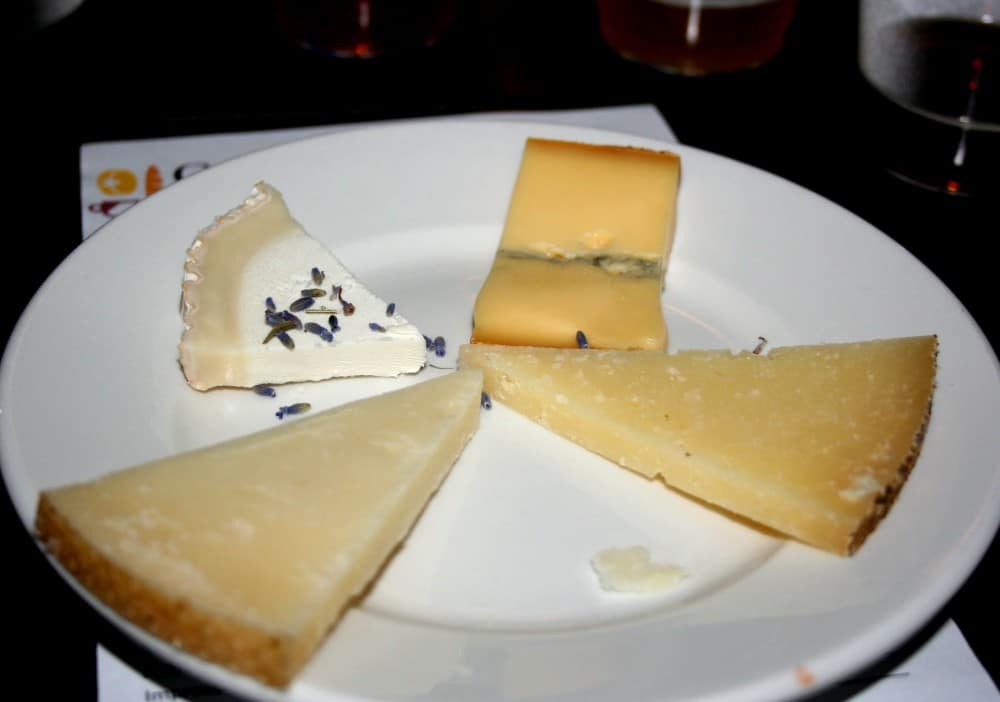
After our beer demonstration, Robert took over as we moved on to cheese. Everyone in attendance received a plate of cheese samples, which Robert pointed out had all been purchased from DiBruno Bros. in case anyone wanted to recreate the delectable science fair on their own. Like the beer, the cheese came in a variety of styles and strengths, but were all approachable enough that everyone could enjoy them.
As we ate, Robert explained the process of cheesemaking, from milk to curds to aging. He threw in his own fascinating trivia, such as the fact that rennet, used to separate the curds from the whey, is found in the stomach lining of baby mammals (but can be replaced by artichoke thistle for vegetarians), as well as explaining that the pig used to make Prosciutto di Parma is fed Parmigiano Reggiano cheese, hence the name.
The cheese portion moved along quickly, as most of the time had been taken by the beer. None of the attendees seemed to mind spending more time on beer, which the energy level in the room reflected. Everyone had a great time, due in no small part to hosts Eric and Robert, who have a clear passion for the subject matter. It was obvious the two never tired of talking about food and beer, or the science behind it–and for those in attendance, both were well appreciated.
As someone who has never had much of a palate for science, I can say I enjoyed every morsel of information and may start thinking more seriously about the processes that brought the beer to my glass.
View more from Ryan Hudak on his blog, In Search of Beer.